Many Are Called…

Wishing you an Old-Style Calendar* Blessed Feast of St. Spyridon & St. Herman of Alaska Day! To my New-Style Calendar* Friends, Christ is Born!

On the church date December 12th, is the Feast of the Holy Wonderworker, St. Spyridon of Tremithus. (270 – 348 AD) St. Spyridon was born in Cyprus, and initially worked as a shepherd and known for his great piety. He married and had one daughter, Irene. Upon the death of his wife, Spyridon entered a monastery, and their daughter entered a convent. St. Spyridon eventually became Bishop of Tremithus and took part in the First Ecumenical Council of Nicaea (325), where he was instrumental in countering the erroneous theological arguments of Arius and his followers. There’s an account of his speech at this event, regarding the Holy Trinity…  At one point, St. Spyridon grasped a brick and squeezed it so hard that miraculously, a flame flew up, while at the same time water trickled downwards, leaving only a small amount of crushed clay within his hand. He exclaimed: “There are these three elements, but one brick; likewise, in the Holy Trinity, there are three Persons, but One God”.

Today we also remember and celebrate the Holy Wonderworker St. Herman of Alaska. St. Herman was a monk, missionary and miracle worker who brought the Orthodox Faith from Russia to the native peoples of Alaska in the late 18th century.  He taught the Holy Gospel of Jesus Christ and defended these people from exploitation by the Russian traders.  Here’s a recent miracle of St. Herman of Alaska on Mt. Denali, and a YouTube Visit to Spruce Island: The holy Relics of St. Herman the Wonderworker. 

For our good, for our happiness, let us make a vow that from this day forth, from this hour, from this minute, let us strive to love God above all else and seek to do His Holy Will. ~ St. Herman of Alaska

A Sermon by +Archpriest John Adams of Eternal Memory, on St. Herman of Alaska

Drawing closer to the Feast of the Nativity we read the gospel (Luke 14:16-24) about those who were invited to a great supper, and those who wouldn’t come, so others take their place. Many are called, but the chosen seem to be those who simply didn’t make an excuse. They came. No matter what their state was when they were called. It wasn’t more important than the feast.

What if there was someone to whom being chosen was more important than anything, more important than pleasure or comfort? To travel thousands of miles in difficult conditions, to live in the cold and dark alone, but always remembering the feast that would come. What would this person be like? Maybe they would be someone who wouldn’t lie, even though it meant death. Maybe when they chanted alone it would sound like a whole choir of angels singing. Maybe if you were alone they would take you in; if you were sick, he would pray for you and you would get well. Maybe if there was going to be disaster, like a tidal wave, maybe he would take the icon the Mother of God to the shore and the water wouldn’t come above it, and you were saved.

They might be like one candle burning in a whole dark continent, but one candle after another is lit from it, and hundreds of years later, they are still burning.

What if you saw the feast, and you saw them enter in to join the others and it was all joy and light, but you were standing on the outside looking in – for when you had been invited over and over, you always had an excuse?

…Today is December 12th on the church calendar and the commemoration of the first Orthodox missionaries to Alaska in 1794… St. Juvenal the first martyr, the martyr St. Peter the Aleut, and St. Herman the Wonderworker.

We are still invited to the feast.

We are still called.

It is still up to us to be one of the chosen.

*Until 1924, the Eastern Orthodox Church universally used the ancient Julian calendar, whereas the Roman Catholic Church, under Pope Gregory XIII, conducted a calendar reform resulting in the Gregorian (new, civil) calendar in 1582. The difference between the two calendars is 13 days between the years 1900 and 2100. Some branches of the Orthodox Church still keep liturgical dates according to the Julian calendar, while some others have adopted using the “new” calendar. However, Orthodox Christians who use both calendars, always strictly adhere and calculate the Great Feast of Pascha, only according to the Julian Calendar.

An Ancient Symbol of Prayer

Photo by Andriy Tod on Unsplash

Let my prayer be set forth as incense before thee. ~ Psalm 141:2

Recently, at an evening service, and through the golden glow of candlelight… smokey tendrils of incense swirled as wreaths of living halos about the holy icons, before wafting upwards as billowing clouds – the noetic breath of our prayers… and the setting sun’s beams pierced through the church windows to ignite the mosaics’ gold tessera like fiery embers. Immersed in all this spiritual beauty, my cup overflowed. It took my breath away.

I’d love to share these beautiful reminders listed from St. Vasilios Greek Orthodox Church – of the rich symbolism and significance of Church incense and the Censer.

What is the Censer?
The censer is a covered dish suspended on four chains. It is used to convey the fragrant smoke of the incense to holy objects. It’s parts represent all of God’s creation.

What does it represent?

  • The ring (symbol of eternity) represents GOD.
  • The top represents ‘Alpha’ (A) the beginning.
  • The four chains represent the Four Evangelists.
  • The twelve bells represent the Twelve Apostles, and their teaching.
  • The Cross reminds us of the cross of our Lord.
  • The top of the bowl represents the Heavens.
  • The firepot (where the incense and charcoal go) is the earth, and the charcoal is man who requires the fire of the Holy Spirit to give him light and life. We blow on the charcoal to set it afire just as God put life in man by breathing on him.
  • The bottom of the cup is the universe of which the earth is a part.
  • The base of the censer is the ‘Omega’ (Ω), the end.

May we continually blow breath to spark our own noetic charcoal – keeping it afire with the Love, Zeal, and the Fragrance of Christ.

In Purple Pastures

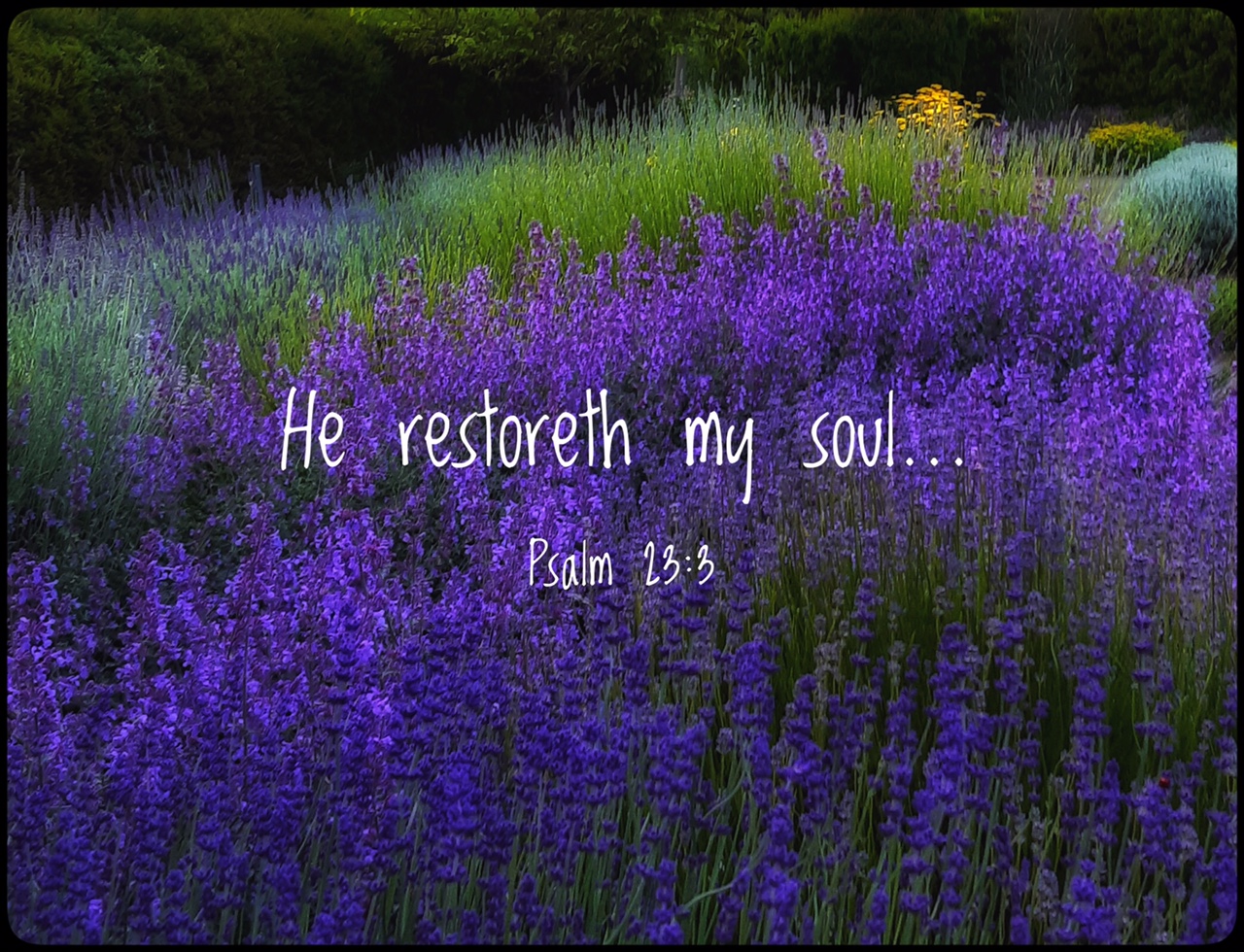
Summer Solstice Strolling through Lavender Fields… a testament of nature praising God! ~ Image by Melania

O sing unto the Lord a new song: sing unto the Lord, all the earth… O worship the Lord in the beauty of holiness… and let the earth be glad… Let the field be joyful, and all that is therein: then shall all the trees of the wood rejoice. ~ Psalm 96:1, 9, 11, 12

Make peace with yourself, and both heaven and earth will make peace with you. ~ St. Isaac the Syrian

Sometimes… just standing in a garden is enough.

With joy and love in Christ.

Spiritual Fragrance

Roses of Spiritual Friendship from Olga

Today is the Feast Day of St. Xenia! (A very special Saint who has greatly helped our family) Congratulations also, to goddaughter Xenia on your Saint’s Day. May God grant you many years!

Yesterday, after service, our youth choir rehearsed It is Truly Meet to Bless Thee, O Theotokos… a hymn they’ll be singing for an upcoming liturgy. Sung from the heart, their pure, prayerful voices filled the air with spiritual fragrance – and arose like incense.

It is Truly Meet – Parish Youth Choir 2023

It is truly meet to bless thee, O Theotokos,
Ever blessed and most pure,
And the Mother of our God.
More honourable than the cherubim,
And more glorious beyond compare
Than the seraphim,
Who without corruption gavest birth
To God the Word,
True Theotokos we magnify thee.

May the Mother of God keep you and your family.

Aflame With Zeal

Image by Photo Mix from Pixabay

When you look at the candles and lamps burning in church, rise in thought from the material fire to the immaterial fire of the Holy Spirit, ‘for our God is a consuming fire.’ When you see and smell the fragrant incense, rise in thought to the spiritual fragrance of the Holy Spirit, ‘for we are unto God a sweet savour of Christ.’ ~ St. John of Kronstadt

In order to teach us that just as the vigil lamp cannot be lit without our hand, so too, our heart, our inward vigil lamp, cannot be lit without the holy fire of God’s grace, even if it were to be filled with all the virtues. All these virtues of ours are, after all, like combustable material, but the fire which ignites them proceeds from God. ~ St. Nikolai Velimirovich

In order to remind us that before anything else the Creator of the world created light, and after that everything else in order; And God said, let there be light: and there was light. And it must be so also at the beginning of our spiritual life, so that before anything else the light of Christ’s truth would shine within us. From this light of Christ’s truth subsequently every good is created, springs up and grows within us. ~ St. Nikolai Velimirovich

May the Light of Christ Illumine us all! Keep looking up… there’s always bright Sonshine above those heavy snow clouds!

Let Us Make a Joyful Noise!

Image by mokca from Pixabay

Make a joyful noise unto the Lord, all ye lands. Serve the Lord with gladness: come before his presence with singing. Know ye that the Lord he is God: it is he that hath made us, and not we ourselves; we are his people, and the sheep of his pasture. Enter into his gates with thanksgiving, and into his courts with praise: be thankful unto him, and bless his name. For the Lord is good; his mercy is everlasting; and his truth endureth to all generations. ~Psalm 100:1-5

…but be filled with the Spirit; Speaking to yourselves in psalms and hymns and spiritual songs, singing and making melody in your heart to the Lord; Giving thanks always for all things unto God and the Father in the name of our Lord Jesus Christ… ~ Ephesians 5:18-20

Nothing elevates the soul, nothing gives it wings as a liturgical hymn does… We should offer up doxologies to God with fear and a contrite heart, in order that they may be accepted like fragrant incense… Nothing so arouses the soul, gives it wing, sets it free from the earth, releases it from the prison of the body, teaches it to love wisdom… as concordant melody and sacred song composed in rhythm. ~ St. John Chrysostom

Pray gently and calmly, sing with understanding and rhythm; then you will soar like a young eagle high in the heavens. Psalmody calms the passions and curbs the uncontrolled impulses in the body. ~ Evagrios the Solitary

To sing is to pray twice. ~ St. Augustine

Wherever there are spiritual melodies, there does the grace of the Spirit come, sanctifying the mouth and the soul. ~ St. Nicodemus of the Holy Mountain

Sing to God in love and humility of spirit, for the Lord rejoiceth therein. ~ St. Silouan the Athonite 

Only ecclesiastical music can express the secret movements of the heart, which are completely different than what worldly music expresses. For this reason the two kinds of music are totally different, just as shown by the words: “sing” and “chant.” ~Photios Kontoglou

In case you haven’t yet discovered this wonderful site of hymnody (in multiple languages), please enjoy: The Rudder Internet Radio Station Streaming Orthodox Music 24/7

May your day be harmoniously tuned with the Spirit… in holy, heartfelt psalmody!

Beauty of the Lord

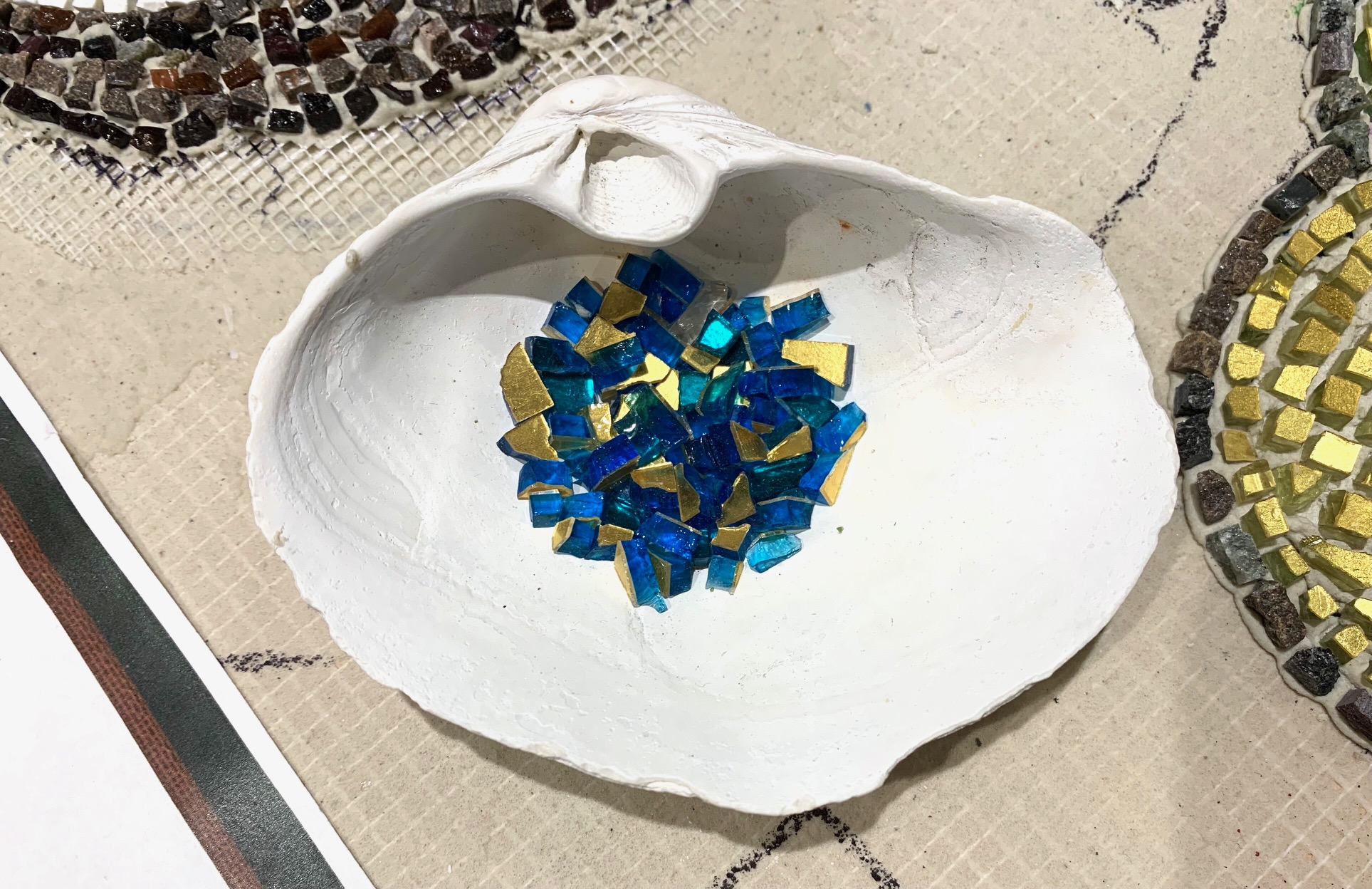
Gold Tesserae Awaiting Placement in Parish Mosaic

One thing have I asked of the Lord, that will I seek after: that I may dwell in the house of the Lord all the days of my life, to gaze upon the beauty of the Lord and to meditate in his temple. ~ Psalm 27:4

Sanctify those that love the beauty of Thy house. Glorify them in return by Thy divine power. ~ Prayer behind the Ambo

…whatsoever things are true, whatsoever things are honest, whatsoever things are just, whatsoever things are pure, whatsoever things are lovely, whatsoever things are of good report; if there be any virtue, and if there be any praise, think on these things. ~ Philippians 4:8

Numinous beauty is found in the physical and spiritual splendour surrounding us!

We perceive God’s grace through the noetic beauty of nature. Our souls sense it when we throw open the doors of our heart and gaze upon the holy icons at Church. We smell it in the sweet fragrance of pure beeswax candles, the bouquets of flowers, and the clouds of billowing incense. We hear it in the joyful voices singing hymns and psalms of praise. We taste it in the Holy Mysteries, the antidoron and prosphora. We experience His Mercy of Peace through the powerful permeation of communal prayer at Divine Liturgy.

Fyodor Dostoevsky once wrote: Beauty will save the world.

True Beauty points to God… Who exudes and transcends Inexpressible Beauty in everything, through the Glorious, Gladsome Light of His Divinity!

Like Fragrant Incense

Image by Dimitris Vetsikas from Pixabay

An Upstairs Cliros Where Choir Sings Behind Congregation

Music is unique among the liturgical arts in that it’s something we have to do every time we come to church. Iconography, architecture, church furnishings, liturgical books, all these are things an artist can produce once and be done with. But music is never finished. As soon as you sing a note it vanishes forever. As soon as the service is over, whatever beauty you achieved during it has to be produced all over again in the next service. ~Benedict Sheehan

Beautiful church singing comes through prayer, attention to the hymns’ text, and by actively watching the director. Liturgical singing is both a physical and spiritual effort… It’s our living Prayer Before the Ambo.

St. Augustine says, When you sing, you pray twice.

For millennium, while Christian Choristers have basked in the spiritual blessings of psalmody, science has more recently determined the physical health benefits of singing. It’s been documented that choral singing synchronizes the choir’s heart rates – especially during slow chants.

In choral church singing, single voices should never stand out. Individuality ceases when we humbly work on hearing each another. Listening carefully is the only way a choir can blend properly to create true harmony. This could be said in regards to many other things in life.

When one has spare time, it’s wonderful to also sing at home… with or without accompaniment. It literally keeps one out of mischief for awhile (yes!), and uplifts our spirits.

Singing spiritual songs from the heart at any time is a musical metamorphosis. Hymns of consolation, joy and thanksgiving help us grow closer to God… and He blesses all who engage in the beauty of His Church!

We ought to offer up doxologies to God with a humble heart, in order that they may be welcome, like fragrant incense. ~ St. John Chrysostom

Let the word of Christ dwell in you richly, teaching and admonishing one another in all wisdom, singing psalms and hymns and spiritual songs, with thankfulness in your hearts to God. ~ Colossians 3:16 

Sing praises to God, sing praises! Sing praises to our King, sing praises! ~ Psalm 47:6 

Oh sing to the Lord a new song; sing to the Lord, all the earth! ~ Psalm 96:1

Make a joyful noise to the Lord, all the earth; break forth into joyous song and sing praises! ~ Psalm 98:4 

Serve the Lord with gladness! Come into his presence with singing!  ~ Psalm 100:2

I will sing to the Lord as long as I live; I will sing praise to my God while I have being. ~ Psalm 104:33

Sing to him, sing praises to him; tell of all his wondrous works!  ~ Psalm 105:2

Let My Prayer Arise

Image by Matthias Grießhammer 

The beautiful Lenten hymn below is from Psalm 141, and sung only at the Liturgy of the Presanctified Gifts.

By opening the noetic eyes and ears of our hearts during these special services, we are imbued with the timeless, heavenly beauty of the Presanctified Liturgy.

May your Lenten Journey be peaceful and fruitful.

Splendour of Three

Spring, flowers, and sunshine… Brighter days ahead!

No sooner do I conceive of the one than I am illumined by the splendour of the three; no sooner do I distinguish them than I am carried back to the one. When I think of any one of the three I think of him as the whole, and my eyes are filled, and the greater part of what I am thinking escapes me. I cannot grasp the greatness of that one so as to attribute a greater greatness to the rest. When I contemplate the three together, I see but one torch, and cannot divide or measure out the undivided light. ~ St. Gregory the Theologian

How Glorious is God
How great our Lord on high in Zion,
Our mortal tongue cannot convey;
Beneath His throne the stardust flying,
Is one with windswept grasses’ sway.
Throughout the Universe His glory
By day and night is bright and holy.
O Lord, Thy Lamb of golden haloes
Reflects Thy face for our eyes;
With psalter-sounds we send our prayers,
Like smoke from censers, to the skies.
Accept, Lord God, from Thy creation
Incense and songs of adoration.
Thy radiance to us revealing,
Thy love transcends a father’s care;
While feeding us, our ailments healing,
Thou showest us Thy Kingdom fair.
Sweet mercy Thou to sinners sendest –
Their hunger with Thy substance endest.

By M.M Kheraskov (1733-1807); English Translation by Alexander F. Beck

error: Content is protected !!