Inexpressible Joy!

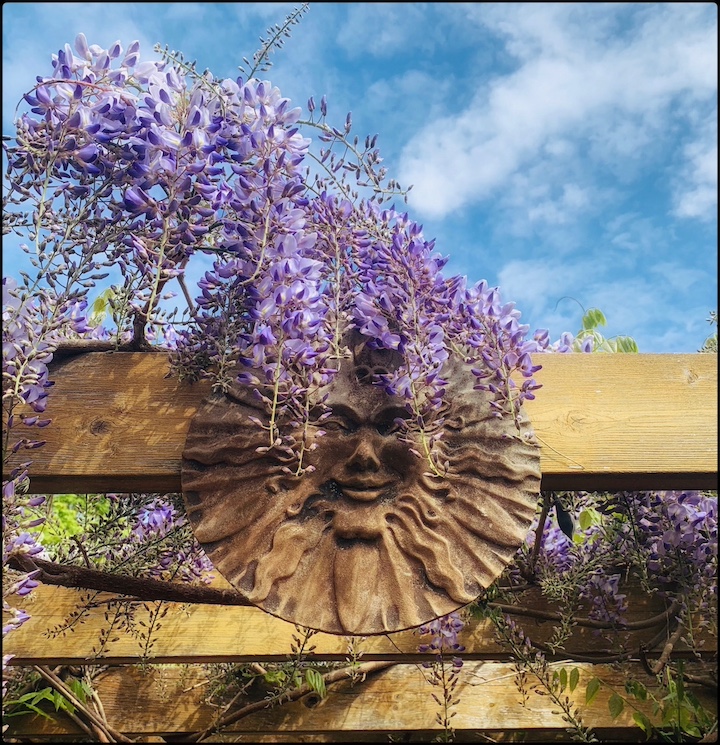
Fragrant Wisteria Cascades Over Sunny Pergola

Christ is Risen!

Truly the light is sweet, and a pleasant thing it is for the eyes to behold the sun; ~ Ecclesiastes 11:7

Now in the springtime, when nature is wearing its most beautiful apparel, one feels inexpressible joy when this natural beauty is accompanied by a sublime spiritual state. Truly, our holy God has made all things in wisdom! ~ Elder Ephraim

Orthodoxy is the sunlight that falls upon the earth. It shines for all who want to be warmed by its rays. ~ Archpriest Victor Potapov.

Nature has donned its beautiful springtime apparel, and everything’s vibrantly alive with the Breath of the Holy Spirit. Let us exalt and rejoice in the golden glow of Sonshine reflecting the spiritual and Divine Light of His Glorious Resurrection!

Truly He is Risen!

Prayer, the Breath of Life

A far corner of a Mosaic Studio, where little threads of various projects bind the artists together as a whole.

Happy Apodosis of Nativity and a Blessed Saint’s Day, Melania!

I recently came across this excerpt on prayer by +Archpriest John Adams, of Eternal Memory. The subject matter is too practical and too timely not to share anew, especially as we move forward into the New Year.

I want to talk of something very important – a matter of life and death, and this is prayer. There are generally considered to be two kinds of prayer. Private prayer and public prayer.

Prayer has been compared to breathing. Without this Breath, there is no Life. Prayers are like threads that go in every direction, binding us to the people we’re near to… each with the whole fabric. It unites the members with each other, with the whole body, uniting the body with the head.

Prayer has been called conversation with God. In prayer, we praise or ask for what we need, or we pray to give thanks. We pray for ourselves and we pray for each other.

Don’t take prayer lightly. Don’t say “I can’t think of anything else to do, so I’ll pray about it.” Don’t put it last, put it first.

If you say to someone, “Oh, I’ll pray for you.” Do it... You’ve made a contract.

(If you ask someone to pray for you, do update them when a situation resolves.)

And, you can pray for someone in secret, hoping for a reward later. Just as you don’t know that someone else is having a conversation with God (about you). What more could you do for yourself, or for someone else, than seek God’s help? That doesn’t mean you won’t have to do anything else, as you may have to do a lot.

In the Gospels, Christ says to Peter, “I have prayed for you.” Many times we read, He went apart, He went up into a mountain to pray, He lifted up His eyes. St. Paul writes in his epistles asking for their prayers. And, he gives his famous commandment, “Pray without ceasing.” Without ceasing – this is what we must try to do – to continue this conversation, to try to come back to it as often as you can remember – and then more often.

Read the morning and evening prayers from the prayer book, you may even have memorized them by now. But don’t let them just run through your mind without attention, and here in this atmosphere, ask for what you need; help with your work, your health, your family, your specific aversion at this time. And in the evening, take a moment to be thankful, take a moment to ask forgiveness.

Breathe in. Breathe out. This is private prayer.

An Ancient Symbol of Prayer

Photo by Andriy Tod on Unsplash

Let my prayer be set forth as incense before thee. ~ Psalm 141:2

Recently, at an evening service, and through the golden glow of candlelight… smokey tendrils of incense swirled as wreaths of living halos about the holy icons, before wafting upwards as billowing clouds – the noetic breath of our prayers… and the setting sun’s beams pierced through the church windows to ignite the mosaics’ gold tessera like fiery embers. Immersed in all this spiritual beauty, my cup overflowed. It took my breath away.

I’d love to share these beautiful reminders listed from St. Vasilios Greek Orthodox Church – of the rich symbolism and significance of Church incense and the Censer.

What is the Censer?
The censer is a covered dish suspended on four chains. It is used to convey the fragrant smoke of the incense to holy objects. It’s parts represent all of God’s creation.

What does it represent?

  • The ring (symbol of eternity) represents GOD.
  • The top represents ‘Alpha’ (A) the beginning.
  • The four chains represent the Four Evangelists.
  • The twelve bells represent the Twelve Apostles, and their teaching.
  • The Cross reminds us of the cross of our Lord.
  • The top of the bowl represents the Heavens.
  • The firepot (where the incense and charcoal go) is the earth, and the charcoal is man who requires the fire of the Holy Spirit to give him light and life. We blow on the charcoal to set it afire just as God put life in man by breathing on him.
  • The bottom of the cup is the universe of which the earth is a part.
  • The base of the censer is the ‘Omega’ (Ω), the end.

May we continually blow breath to spark our own noetic charcoal – keeping it afire with the Love, Zeal, and the Fragrance of Christ.

Blessings On A Snow Day

Feature Image by Irena

Praise the Lord from the earth… fire and hail, snow and mist, stormy wind fulfilling his word! ~ Psalm 148:7-8

Purge me with hyssop, and I shall be clean; wash me, and I shall be whiter than snow. ~ Psalm 51:7

For as the heavens are higher than the earth, so are my ways higher than your ways and my thoughts than your thoughts. For as the rain and the snow come down from heaven and do not return there but water the earth, making it bring forth and sprout, giving seed to the sower and bread to the eater, so shall my word be that goes out from my mouth; it shall not return to me empty, but it shall accomplish that which I purpose, and shall succeed in the thing for which I sent it. ~ Isaiah 59:9-11

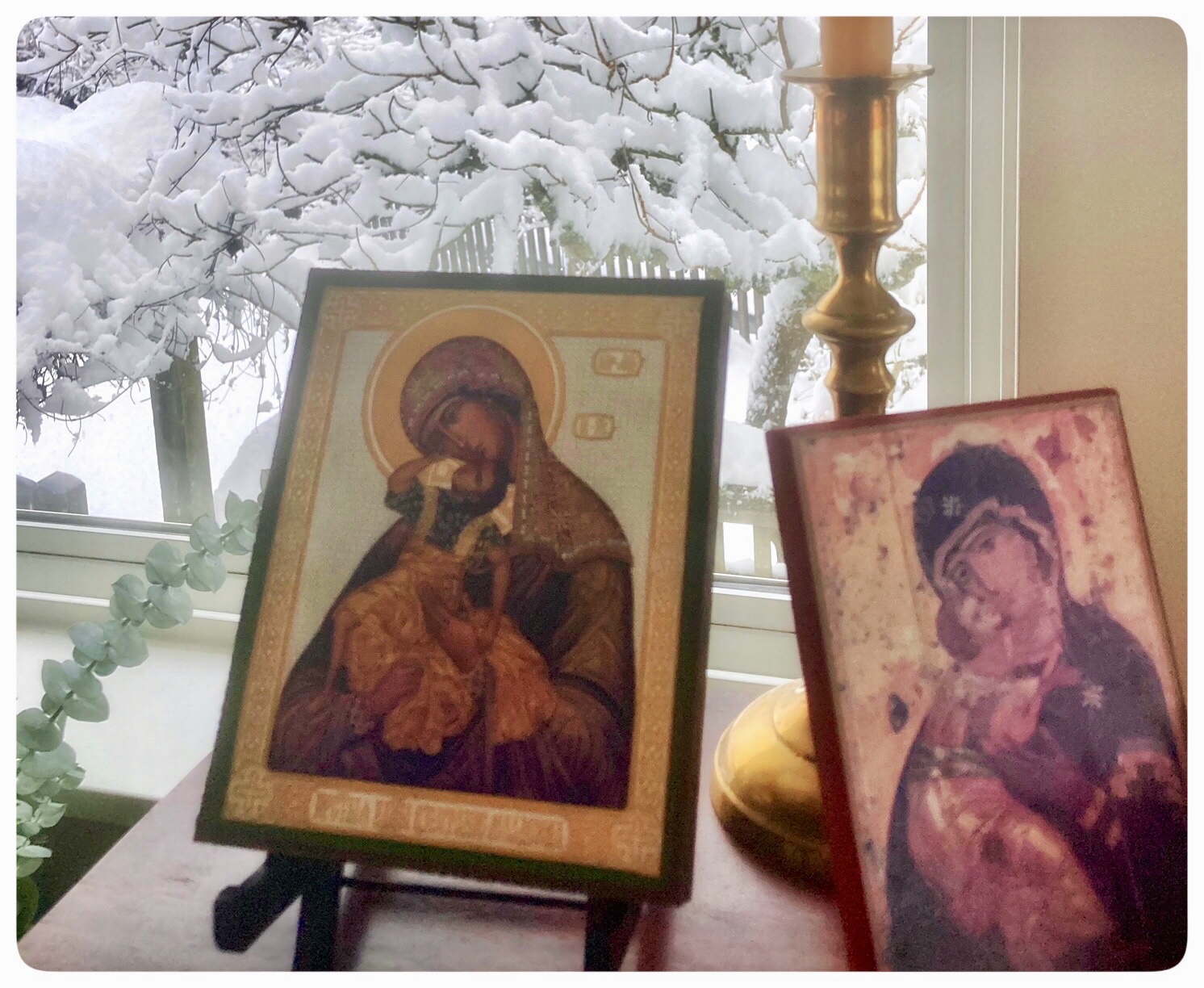
Falling snowflakes are beautiful. They swathe our backyard’s bare tree branches with mystique, and envelope everything else in a pure milk-white blanket.

But, to me, a tropical wildflower at heart, I love snow – for maybe all of 10 minutes before vehemently wishing it away.

It’s not my thing. I loathe the cold. Always have. However, it’s part of living in a climate where to every thing, there is a season.

On a recent snow day, I tried to consider the snow as a blessing in disguise. I cranked up my Hawaiian Instrumental “Summer” Music, and fiercely tackled the annual cleaning of a certain Kitchen Drawer of No Return.

Although snow is a love/hate thing for me, I must begrudgingly admit that I do love to go outside, and “listen” to the whispers of falling snowflakes. There’s a peaceful, gentle, and calm stillness… Like the earth is holding her breath, waiting with patient endurance and expectant hope – for there’s always Sonshine above, ready to pierce through those snow clouds… and sweet spring is right around the corner!

…For favourable weather, for an abundance of the fruits of the earth, and for peaceful times, let us pray to the Lord… ~ Litany of Peace

His Infinite, Unconditional, Love

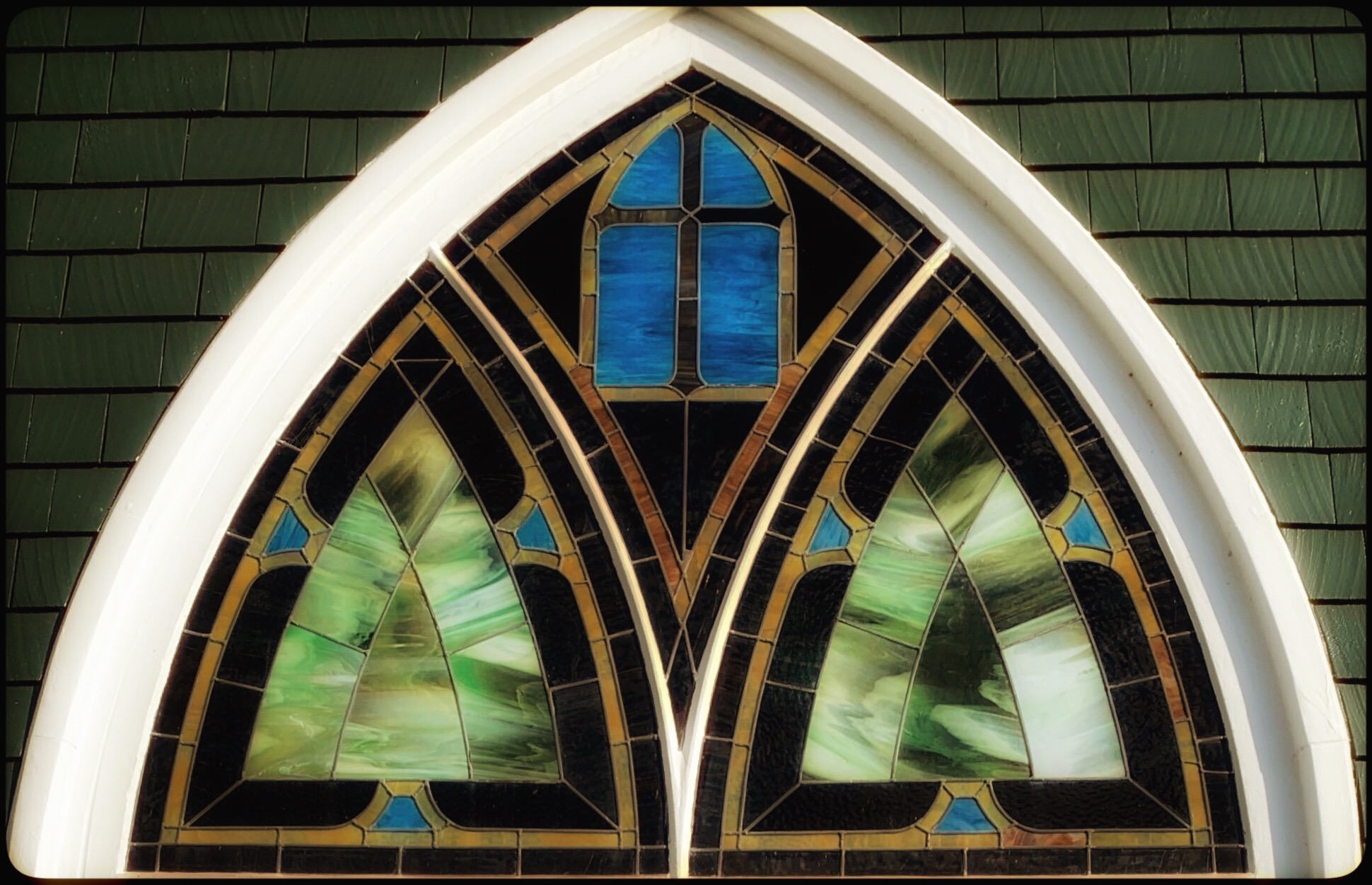
Hanalei Church windows absorb and reflect the early evening’s Divine, Gladsome Light.

God is everywhere. There is no place God is not…You cry out to Him, ‘Where art Thou, my God?’ And He answers, “I am present, my child! I am always beside you.’ Both inside and outside, above and below, wherever you turn, everything shouts, ‘God!’ In Him we live and move. We breathe God, we eat God, we clothe ourselves with God. Everything praises and blesses God. All of creation shouts His praise. Everything animate and inanimate speaks wondrously and glorifies the Creator. Let every breath praise the Lord! ~ St. Joseph the Hesychast

We can only meet God in the present moment. This is an area where God chooses to place limits on His own power. We choose whether or not to live in the present moment. Because we can encounter God only in that present moment, whenever we live in the past or in the future, we place ourselves beyond His reach. ~ Archimandrite Meletios (Webber) 

I cannot reflect on what is past, because I live in the present moment… Yesterday does not exist. Tomorrow belongs to God, as yesterday did… So I keep quiet in God’s Eternal Present!... ….By living in yesterday we delay tomorrow’s march. We cannot live in the past which does not exist, and so give it existence it does not have… ~ St. Gavrilia (Gerontissa Gavrilia)

What has happened has happened, it is in the past. Just keep on going, all the while asking for help from God. ~ Elder Thaddeus of Vitovnica

We slip.
We fall.
We pull ourselves up again.
We persevere.
We keep walking toward God.
We focus forward.
We don’t look back.

God is right here! Right now!

We are so blessed!

God loves us! Infinitely! Unconditionally!

He loves us SO much that He’s given us free will in every aspect of our life, and won’t interfere at all, unless we choose to ask Him in, and wrap ourselves in the Eternal Present of God.

May your path today be Divinely Inclusive, and imbued with His Illuminating Light!

With love in Christ.

Because

Image by Barbara Jackson from Pixabay


How can we not?


Cleansing the Door of Our Perceptions

Image by Dimitris Vetsikas from Pixabay

Christ is Risen!

“Let us go forth in peace” is the last commandment of the Liturgy. What does it mean? It means, surely, that the conclusion of the Divine Liturgy is not an end but a beginning. Those words, “Let us go forth in peace,” are not merely a comforting epilogue. They are a call to serve and bear witness. In effect, those words, “Let us go forth in peace,” mean the Liturgy is over, the liturgy after the Liturgy is about to begin. This, then, is the aim of the Liturgy: that we should return to the world with the doors of our perceptions cleansed. We should return to the world after the Liturgy, seeing Christ in every human person, especially in those who suffer. In the words of Father Alexander Schmemann, the Christian is the one who wherever he or she looks, everywhere sees Christ and rejoices in him. We are to go out, then, from the Liturgy and see Christ everywhere. ~ Metropolitan Kallistos Ware of Diokleia

What does God want me to do? …The answer: God is not interested in where you are or what you do… He is interested only in the quality and quantity of the love you give. Nothing else. Nothing else. ~ Mother Gabrielia

God is everywhere.  There is no place God is not…You cry out to Him, ‘Where art Thou, my God?’  And He answers, “I am present, my child! I am always beside you.’  Both inside and outside, above and below, wherever you turn, everything shouts, ‘God!’  In Him we live and move. We breathe God, we eat God, we clothe ourselves with God.  Everything praises and blesses God.  All of creation shouts His praise. Everything animate and inanimate speaks wondrously and glorifies the Creator. Let every breath praise the Lord! ~ St. Joseph the Hesychast, 78th Letter

Sustaining Stillness

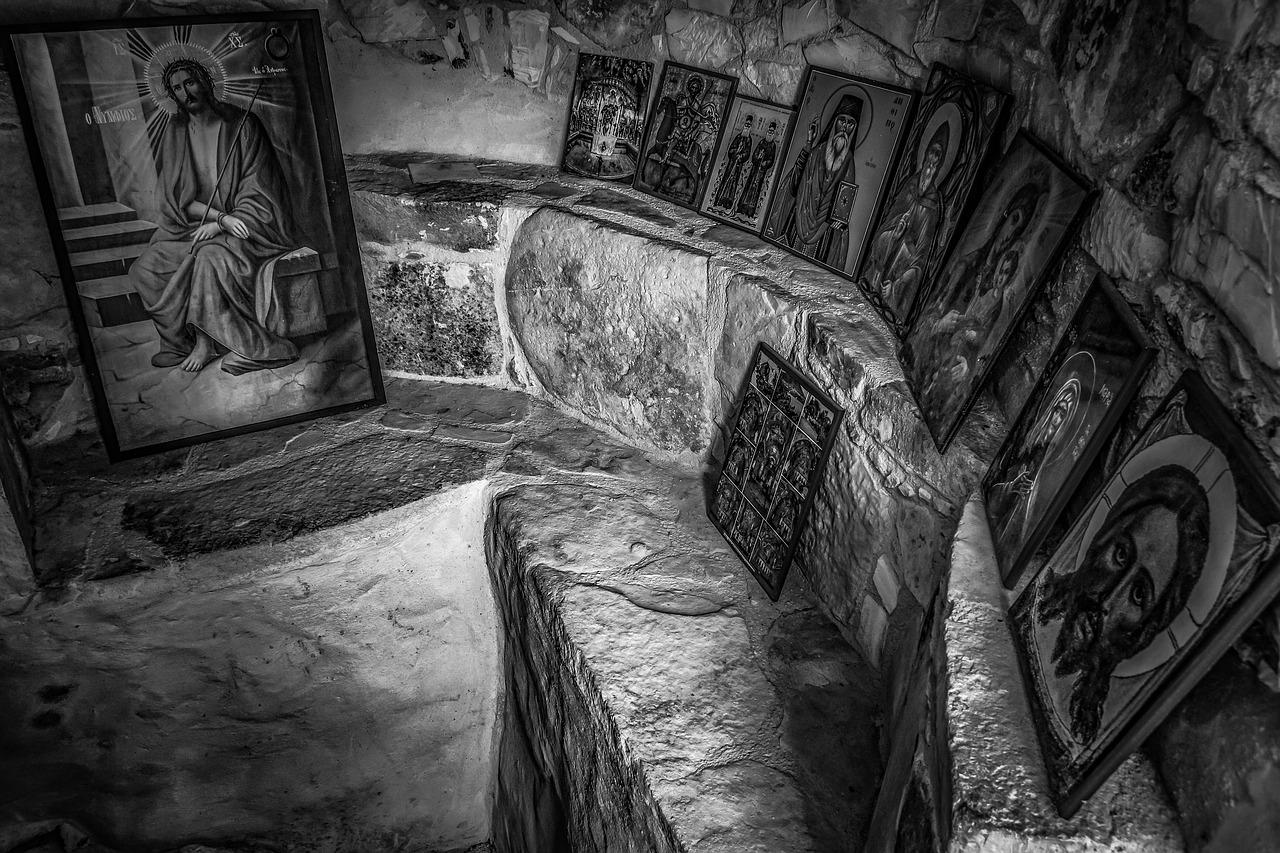
Cave Church by Dimitris Vetsikas from Pixabay

Congratulations on your Saint’s Day Anastasia!

Words are instruments of this world, but silence is the mystery of the age to come. ~ St. Isaac of Syria

Silence is the cross on which we must crucify our ego. ~ St. Seraphim of Sarov

Our most vulnerable spot is found in many words and discussions. What we say remains to eternity. Be still and know… There is no greater school than this kind of stillness of the mind. The language of God is silence. ~ Gerontissa Gavrielia

Sagacity of Silence

Words are instruments of this world, but silence is the mystery of the age to come. ~ St. Isaac of Syria

Silence is the cross on which we must crucify our ego. ~ St. Seraphim of Sarov

Very desirable is the prayer of the heart. Very desirable is the silence of the heart. ~ St. Ignatius Brianchaninov

It is good to learn to pray without words, with the breath and beating of our hearts, for silence is the perfect prayer. Silence is the language of God. We learn His language as we do other languages, through listening intently and practicing what we hear. ~ Fr. Antony Hughes

Wrapped in Light

Inspiring local sunset accompanied with a natural quartet of peaceful, lapping waves, tangy seabreezes, soft rustling cliff grasses, and the yodeling of gulls flying home to roost for the night.

Bless the Lord, O my soul. O Lord my God, thou art very great; thou art clothed with honour and majesty. Who coverest thyself with light as with a garment: who stretchest out the heavens like a curtain: Who layeth the beams of his chambers in the waters: who maketh the clouds his chariot: who walketh upon the wings of the wind: Who maketh his angels spirits; his ministers a flaming fire: Who laid the foundations of the earth, that it should not be removed for ever. Thou coverest it with the deep as with a garment: the waters stood above the mountains. ~ Psalm 104:1-6

The word inspire comes from Middle English enspire, derived from the Latin inspirare, which means to breathe or blow breath into. Inspire was originally used in the sense of divinity imparting a truth or idea to someone.

Watching the sunset above inspired my soul with a few recollective breaths of memory verse, from Psalm 104.

error: Content is protected !!