Bread of Life

Greetings on the Apodosis (the leave taking of the afterfeast) of the Ascension!

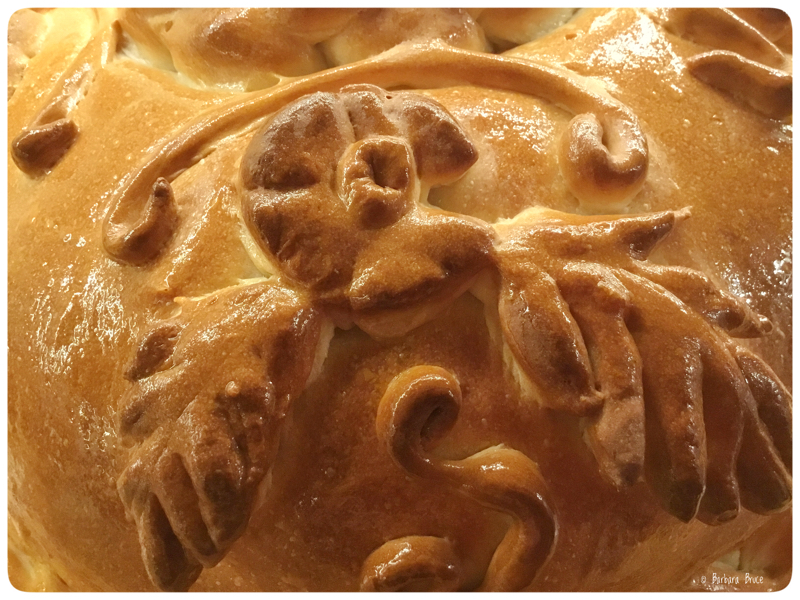
Prosphora is a leavened bread baked solely for use in the Divine Liturgy and further prepared with prayers during proskomedia, for the Holy Eucharist.

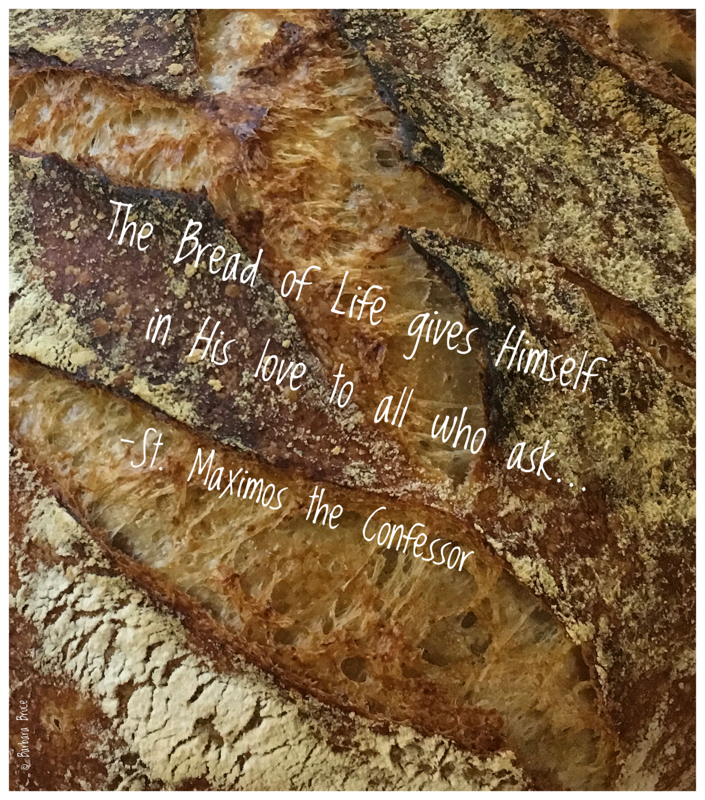
The Bread of Life gives Himself in His Love to all who ask… ~ St. Maximus the Confessor

…Give us this day our daily bread… ~ Lord’s Prayer

Jesus answered, It is written: ‘Man shall not live on bread alone, but on every word that comes from the mouth of God.’ ~ Matthew 4:4

And Jesus said unto them, I am the bread of life: he that cometh to me shall never hunger; and he that believeth on me shall never thirst. ~ John 6:35

Truly, truly, I say to you, whoever believes has eternal life. I am the bread of life.  Your fathers ate the manna in the wilderness, and they died. This is the bread that comes down from heaven, so that one may eat of it and not die. I am the living bread that came down from heaven. If anyone eats of this bread, he will live forever. And the bread that I will give for the life of the world is my flesh. ~ John 6:47-51

Therefore let us keep the Festival, not with the old bread leavened with malice and wickedness, but with the unleavened bread of sincerity and truth. ~ 1 Corinthians 5:8

And you shall set the bread of Presence on the table before me regularly. ~ Exodus 25:30

He causeth the grass to grow for the cattle, and herb for the service of man: that he may bring forth food out of the earth; And wine that maketh glad the heart of man, and oil to make his face to shine, and bread which strengtheneth man’s heart. ~ Psalm 104:14-15
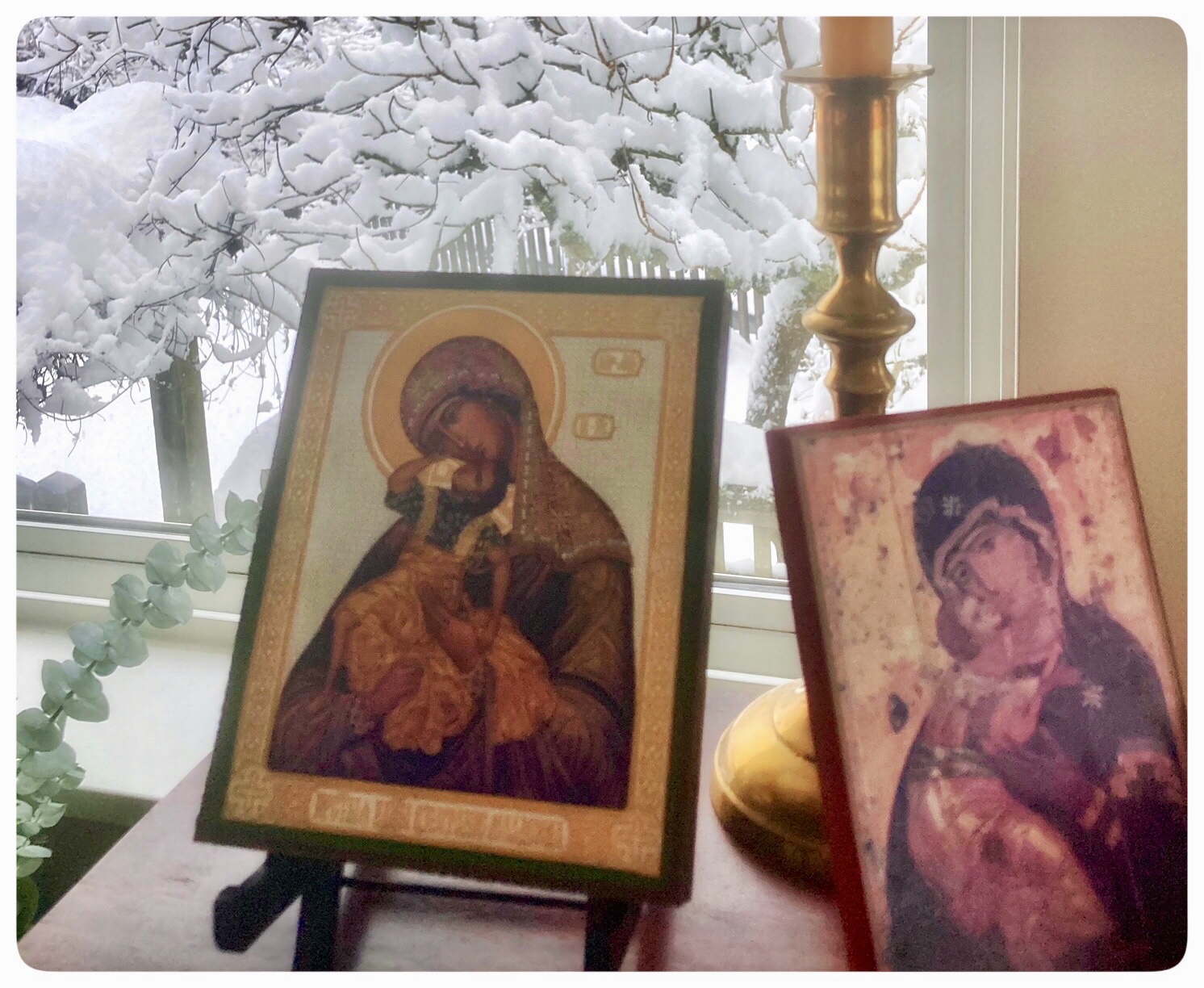
Blessings On A Snow Day

Feature Image by Irena

Praise the Lord from the earth… fire and hail, snow and mist, stormy wind fulfilling his word! ~ Psalm 148:7-8

Purge me with hyssop, and I shall be clean; wash me, and I shall be whiter than snow. ~ Psalm 51:7

For as the heavens are higher than the earth, so are my ways higher than your ways and my thoughts than your thoughts. For as the rain and the snow come down from heaven and do not return there but water the earth, making it bring forth and sprout, giving seed to the sower and bread to the eater, so shall my word be that goes out from my mouth; it shall not return to me empty, but it shall accomplish that which I purpose, and shall succeed in the thing for which I sent it. ~ Isaiah 59:9-11

Falling snowflakes are beautiful. They swathe our backyard’s bare tree branches with mystique, and envelope everything else in a pure milk-white blanket.

But, to me, a tropical wildflower at heart, I love snow – for maybe all of 10 minutes before vehemently wishing it away.

It’s not my thing. I loathe the cold. Always have. However, it’s part of living in a climate where to every thing, there is a season.

On a recent snow day, I tried to consider the snow as a blessing in disguise. I cranked up my Hawaiian Instrumental “Summer” Music, and fiercely tackled the annual cleaning of a certain Kitchen Drawer of No Return.

Although snow is a love/hate thing for me, I must begrudgingly admit that I do love to go outside, and “listen” to the whispers of falling snowflakes. There’s a peaceful, gentle, and calm stillness… Like the earth is holding her breath, waiting with patient endurance and expectant hope – for there’s always Sonshine above, ready to pierce through those snow clouds… and sweet spring is right around the corner!

…For favourable weather, for an abundance of the fruits of the earth, and for peaceful times, let us pray to the Lord… ~ Litany of Peace

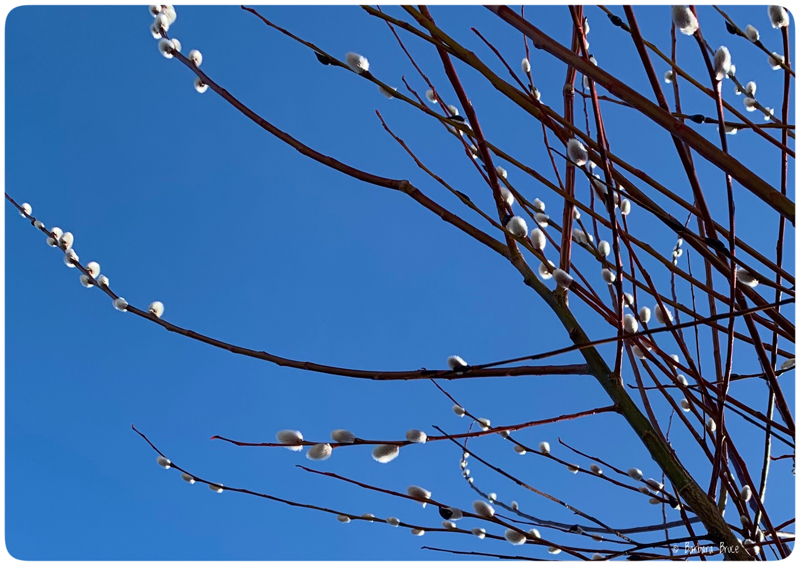
Look at the Pussy Willows

Silver, Furry, Catkins, Reach for the Sky

Now we worry about a piece of bread, about a roof over our heads, about our social conditions. And it seems to us that the meaning of life consists of this. But the Church says, Look at the pussy willows: leaves will sprout and later flowers and fruit. So it is even in a Christian soul. ~ Archbishop Andrei Rymarenko (1893- 1978)

A Little Leaven

Detail of Greeting Bread and Salt for the Archbishop – May 2019

Just as a little leaven, according to the Apostle’s words, is mixed with all the dough, so the body that was raised by God to immortality, once it is introduced into our body, wholly changes it and transforms it into his own substance. ~ St. Gregory of Nyssa

Song of Bread

He who asks to receive his daily bread does not automatically receive it in its fullness as it is in itself: he receives it according to his own capacity as recipient. The Bread of Life (cf. St. John 6:35) gives Himself in His love to all who ask, but not in the same way to all; for He gives Himself more fully to those who have performed great acts of righteousness, and in smaller measure to those who have not achieved so much. He gives Himself to each person according to that person’s spiritual ability to receive Him. ~St. Maximos the Confessor

The Lord promised to send the Comforter. (St. John 16:7), Who should join us to God. For as a compacted lump of dough cannot be formed of dry wheat without fluid matter, nor can a loaf possess unity, so, in like manner, neither could we, being many, be made one in Christ Jesus without the water from heaven. And as dry earth does not bring forth unless it receives moisture, in like manner we also, being originally a dry tree, could never have brought forth fruit unto life without the voluntary rain from above. For our bodies have received unity among themselves by means of that laver which leads to incorruption; but our souls, by means of the Spirit. Wherefore, both are necessary, since both contribute towards the life of God. ~ St. Irenaeus of Lyons

Skylark Buns Tradition

Skylark buns are traditionally baked to celebrate the Holy 40 Martyrs of Sebaste.

Sebaste, an ancient Roman town, is now called Ayas in modern-day Turkey. The date of the Holy Forty Martyrs’ “heavenly birthday” falls on March 22/9 (320 AD) and always within Great Lent.

The Holy Forty Martyrs were soldiers in the Roman 12th Legion called Fulminata (the Lightning -Thundering Legion). As Christians, they refused to offer sacrifice to the pagan gods, and were brought to trial before the commander. After enduring many sufferings, they attained the joyous reward reserved for those who give their lives for Christ. The unwavering fortitude of the Holy Forty Martyrs exemplifies great faith, and perseverance to the end.

The Holy Fathers of the Church refer to Great Lent as a fasting spring. During this period, the souls of the faithful are sown with seeds of divine grace, to yield a harvest of good deeds, throughout the year that follows. 

Buns shaped like birds (also known as skylarks) are traditionally baked to celebrate the Forty Martyrs of Sebaste’s feast day.  Skylark buns are also shared after church on the first Sunday closest to their feast day, which also occurs near the first day of spring.

The skylark buns remind us of the Forty Martyrs’ steadfastness… inspiring own our souls to soar heavenward like birds, upon the wings of divine love; looking unto Jesus, the Author and finisher of our lives.  

To Make the Larks    

Take a piece of risen yeasted bread dough, about the size of a medium egg, and roll it out into a long ropey piece, about 5 inches long. 

Tie it loosely into a knot, with approximately equal length protruding from both ends. 

Put on a lightly greased cookie sheet (or use parchment paper). With a pair of scissors, cut a “beak” on one end of the knot, and on the other end of the knot, cut a “tail” into about 3 or 4 feathered strands. 

Push 2 peppercorns firmly into the head, as eyes.  

Do not put birds on cookie sheet too closely together, as they spread a bit as they bake. Cover, let rise again for about half an hour. 

Pop into a preheated 370* oven and bake about 15-20 minutes or until golden brown. 

TIP: For tastier buns, use a bit of honey, a dash of cardamon, and lemon or orange zest in the dough. 

Some people prefer to use currants for the eyes, although these can turn gooey. 

Birds freeze very well if baking ahead of time. You may need to secure their eyes again, if they come loose in bag when thawing.

Pray for One Another

And pray in the Spirit on all occasions with all kinds of prayers and requests. With this in mind, be alert and always keep on praying for all the Lord’s people. ~Ephesians 6:18

Therefore confess your sins to each other and pray for each other so that you may be healed. The prayer of a righteous person is powerful and effective. ~ James 5:16

As bread is food for the body and virtue is food for the soul, so spiritual prayer is food for the mind. ~ St. Nilus of Mt. Sinai

No one can heal my disease except He Who knows the depths of the heart. ~ St. Ephraim the Syrian

If you do not feel like praying, you have to force yourself. The Holy Fathers say that prayer with force is higher than prayer unforced. You do not want to, but force yourself. The Kingdom of Heaven is taken by force (Matt. 11:12). ~ St. Ambrose of Optina

Abba Macarius was asked, ‘How should one pray?’ The old man said, ‘There is no need at all to make long discourses, it is enough to stretch out one’s hands and say, “Lord, as You will, and as You know, have mercy.” And if the conflict grows fiercer say, “Lord, help!” He knows very well what we need and He shows us His mercy.’ ~ Abba Macarius

For what is prayer? Prayer is the raising of the mind and heart to God- for praise and thanksgiving and beseeching Him for the good things necessary for soul and body. The essence of prayer, then is the mental ascent to God from the heart. The mind stands in the heart consciously before the face of God and, filled with proper and necessary reverence, it begins to pour out its heart before Him. This is prayer of the heart! ~ St. Theophan the Recluse

If you feel sweetness or compunction at some word of your prayer, dwell on it; for then our guardian angel is praying with us. ~ St. John Climacus

Greetings on St. Basil’s Day

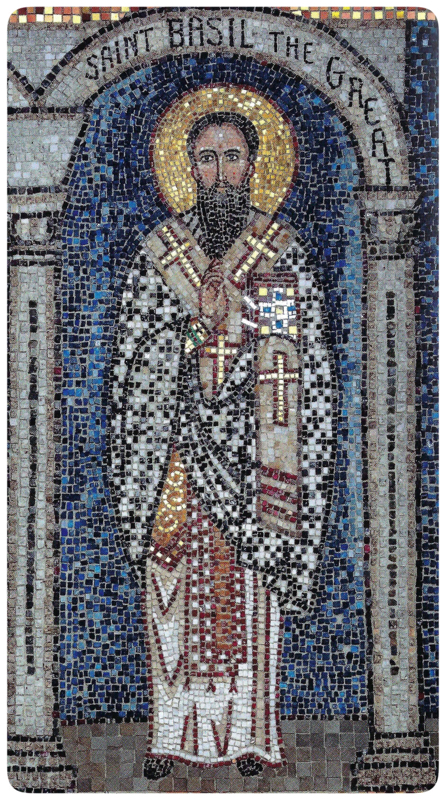
St. Basil the Great wall mosaic – St. Sophia Orthodox Church

Greetings on this second feast day which falls during Christmastide, celebrating the wonderful saint… St. Basil the Great!

Many bake the traditional cake in his honour!

Preserve gratitude like a precious deposit within your soul, and from it you will receive a double portion of delight. Remember the apostolic word, “Give thanks in all circumstances.” ~ St. Basil the Great

For if we all took only what was necessary to satisfy our own needs, giving the rest to those who lack, no one would be rich, no one would be poor, and no one would be in need. ~ St. Basil the Great

A tree is known by its fruit; a man by his deeds. A good deed is never lost; he who sows courtesy reaps friendship, and he who plants kindness gathers love. ~ St. Basil the Great

A good deed is never lost; he who sows courtesy reaps friendship, and he who plants kindness gathers love. ~ St. Basil the Great

When you sit down to eat, pray. When you eat bread, do so thanking Him for being so generous to you. If you drink wine, be mindful of Him who has given it to you for your pleasure and as a relief in sickness. When you dress, thank Him for His kindness in providing you with clothes. When you look at the sky and the beauty of the stars, throw yourself at God’s feet and adore Him who in His wisdom has arranged things in this way. Similarly, when the sun goes down and when it rises, when you are asleep or awake, give thanks to God, who created and arranged all things for your benefit, to have you know, love and praise their Creator. ~ St. Basil the Great

Human life is but of brief duration. ‘All flesh is grass, and all the goodliness thereof is as the flower of the field. The grass withers, the flower fades; but the word of our God shall stand forever’ (Isa. 40:6). Let us hold fast to the commandment that abides, and despise the unreality that passes away. ~ St. Basil the Great

error: Content is protected !!