Possess Ye Your Souls!

Photo detail shared by Melania

The Little Snowdrop Flowers above, patiently persevere in a church garden. They struggle and successfully push up through the soil and debris, to bloom and thrive from the Feast of Christ’s Nativity to Candlemas! May we do the same on our journey!

You may have heard of Ukrainian Christmas or Orthodox Christmas, that’s celebrated on the civil calendar date of January 7th, and wonder what this means? 🤔 The history of the church calendar is complicated. During the past 100 years or so, for fixed feast days, some Orthodox jurisdictions and parishes follow the New (civil) Style Gregorian Calendar and some continue to use the Old Style Julian Calendar (which falls 13 days behind today’s civil date), appearing like it’s landing on January 7th New Style calendar… but its actually December 25th on the Old Calendar! All Orthodox Churches celebrate Christmas on December 25th, and one calendar date is not “more Orthodox” than the other. There are simply two different calendars which tell us when December 25th happens! 🎄If you have family and friends who celebrate Christmas on a different calendar, be joyful with them! Celebrate and glorify Him, regardless! For, Christ is Born!

On December 25th according to the New Style Calendar (December 12 Old Style), St. Herman of Alaska and St. Spyridon of Tremithus are happily celebrated. While my husband and I are Old Calendar, and some of my family are New Calendar… we simply commingle this special date together.

I’ll always remember and treasure my husband’s and my very first visit to an Orthodox Christian Church Service. We arrived on what we thought was Christmas, but ended up learning about Saints Herman and Spyridon, and the TWO Church calendars. In the golden glow of candlelight, smokey tendrils of incense swirled like living halos about the holy icons of the saints adorning the walls… saints who lived holy lives and had a lesson for each one of us. As the incense wafted upwards like prayers to heaven, sunbeams pierced through a little window and lit the gold tessera on a mosaic, like fiery embers. And we knew we had “come home.”

In your patience possess ye your souls. ~ St. Luke 21:19

Verily, verily, I say unto you, Except a corn of wheat fall into the ground and die, it abideth alone: but if it die, it bringeth forth much fruit. ~ St. John 12:24

No matter how little you are, no matter how tired, you mustn’t give up. For, I repeat, no misfortune means anything. Nothing is lost as long as faith is established, the soul doesn’t surrender, and you must raise your head again!
~ Elder Arsenie

…For life is a continuous death. It is just a matter of our approach to it, for we must know how to die and to arise everyday. ~ Eternity in the Moment; The Life and Wisdom of Elder Arsenie Papacioc [page 257]

Highly recommend this book!

Eternity in the Moment

by Sorin Alpeti
(Published by the St. Herman of Alaska Brotherhood)

To order in Canada:
From Monastere Vierge Marie La Consolatrice, Quebec


We have passed the winter equinox. Days are becoming longer, and there’s always Sonshine above those clouds!

With love in Christ.

Lo, How the Rose!

Happy St. Andrew’s Day! Blessed Feast!

I was thrilled to spy our own Christmas Rose (above) popping up in a patio planter during a very gray day last week. This hardy little white blossomed evergreen Hellebore is called a Lenten Rose (also known as Christmas Rose), and, in some areas of the world, blooms exuberantly during the Nativity Fast.

While not literally a rose in the true sense, it belongs to the Ranunculi family, and sports a beautiful profusion of long lasting snow white blossoms during Advent – the Nativity Fast. Also, and fittingly, there’s a pinky-purple version which flower during Springtime’s Great Lent season as we journey to the Great Feast of Pascha (Easter)!

There’s a sweet mediaeval Christmas Rose legend, stemming from when a little shepherdess who witnessed the multitude of angels singing to the shepherds abiding in the fields, keeping watch over their flocks on the night of Christ’s Birth. She ran with wonder along with the others to the cave, and seeing Him laid in a manger, wept bitterly – for she had nothing to give to the Holy Heavenly Child. An angel saw her heartfelt love, and changed her fallen tears of woe into Christmas Roses. Overjoyed, the little shepherdess quickly stooped and gathered up the brilliant snow white blossoms and presented them to Baby Jesus’ Family.

What shall we give Him?

Lo, how the Rose,
Becometh thorn,
For, for which cause,
the Prince of Peace was born!
~ From 4th Verse of Little Pine Tree

I would like to share the ancient, historical Orthodox Tradition of the Glastonbury Rose, which St. Joseph of Arimathea himself planted on British soil (scroll further down the link) and which exists and flowers to this very day, blooming on the Old Calendar’s Christmas date.

To me, our little patio Christmas Rose symbolizes bright hope and purity, and thrives… no matter what stormy weather blows its way! Such an inspiration for any season!

Let us, looking upwards, offer our own small gifts of faith and hope as we prepare to present them to Him with pure love, whilst plodding the pilgrimage path towards the Feast of His Birth.

Wishing you a most Blessed Nativity Fast.

May it be Peaceful and Fruitful.

With love in Christ.

St. Mary of Egypt

Parish Mosaic – St. Mary of Egypt with Lampada

Undated Sermon on the Life of St. Mary of Egypt [circa early 2000’s], by +Archpriest John Adams, of Eternal Memory

This week we read again the Great Canon, with the life of St. Mary of Egypt who is one of the most loved and revered saints.

I remember reading it the first time. Eve (Princess Eve Galitzine, a founder of our parish) had xerox copies. Oh, it was so long, but so amazing, remarkable, and moving.

Her life went from one extreme to the other, from the very depths – to the very heights.

Her life is inspiring and edifying. Those themselves who are hopeless – she lifts up, those who have exhausted themselves, like the monk Zosimas, who had started to think of himself as perfect, she humbles.

Living alone in the desert, without food or clothing, tormented, but with prayer and tears through great struggles, she clung to the Mother of God, until she was lifted up spiritually, even physically, above the earth, and above the waters.

Last Sunday was St. John of the Ladder (Climacus), and we saw from his example how the prescribed life of the ascetic leads to understanding. Further, this Sunday, we are shown St. Mary of Egypt’s ascetical life, and we see a radical transformation, a model of repentance. This is how we begin, and how we continue. “Open unto me the Gates of Repentance”. We want to turn in repentance, (to be) enlightened. We want to behold the Resurrection more clearly, more brightly.

(Soon comes) Palm Sunday and the pace picks up. At vigil on Saturday evening, there’s the blessing of bread, wine, oil, and palms are distributed…

Try to attend every (Holy Week) service you can, these services are all unique. They all add an essential element to our spiritual growth.

Autumnal Prayer

Image by Joe from Pixabay

Satisfy us in the morning with your steadfast love, that we may rejoice and be glad all our days. ~ Psalm 90:14

November 27/14

Happy Eve of the Nativity Fast!

Tomorrow we begin our spiritual pilgrimage into the Advent season… to contemplate the upcoming Great Feast of Christ’s Incarnation.

Just like Great Lent is before Easter/Pascha, the ancient Nativity Fast is a reflective, joyful time for spiritual preparation – nourished with prayer, love of one’s neighbour, and generous almsgiving.

Each fast is fresh, new, and a collective reminder to shift focus away from oneself, and onto the needs of others, instead.

Together we’ll begin the late autumnal journey with sweeping the dried leaves and debris away from body and soul.

We fast before we feast, and the feasting aspect is saved to start on the actual Nativity Feast Day itself, including the following bright “12 days of Christmastide”.  

May your Nativity Fast be peaceful and fruitful!

With love in Christ.

Happy Sts. Peter & Paul Day!

July 12/June 29

Icon of Saints Peter (left) and Paul (right).

The long Apostles’ Fast is over!

Greetings on this ancient, joyful feast day, commemorating the Holy Apostles Saints Peter and Paul. They are celebrated together because of their great roles in the Church as fathers and guides to all Christians.

O first-enthroned among the apostles and teachers of the whole world: Entreat the Master of all, that He grant peace to the world: and great mercy to our souls. ~ Troparion of Apostles Peter & Paul (Tone 4)

With hymns of praise let us honour the true preachers of piety, the all-radiant stars of the Church: Peter, the rock of Faith, and Paul, the teacher of the truth and initiate of the mysteries of Christ. For both of them having sown the word of truth in the ears of the faithful beseech Christ God Who giveth fruitfulness unto all, that our souls be saved. ~ Stichera for Apostles Peter & Paul (Tone 6)

Remembering the Old English Poem associated with the tradition of harvesting lavender on (or around) this particular Feast Day, we added a small, fresh bouquet of Provence Lavender at the festal icon of Saints Peter and Paul. “If you wish lavender bushy and tall, then tend on the Feast of Saints Peter and Paul.

We have 4 lavender bushes that need “tending”. Their harvested stems are bundled securely into individual bouquets, (but not too tightly, and making sure they’re not damp) then hung upside down (flowers at bottom) to dry in the house, avoiding direct sunlight. It can take about 3 weeks for the stems and flowers to dry. Meanwhile, the house smells amazing! Lavender can easily be made into drawer/closet/car sachets, sleep pillows, or kept/shared as a dried floral wall decoration. If they dry straight enough, you can pop them into a dry vase to keep. I also strip some buds off several stems and put them in a lidded glass jar and stored in a dark kitchen cupboard- for use in… tea, lemonade, vinaigrettes, or baking. During winter use, it’s a joy to remember they were picked on a sunny summer Saints’ Day! Holy Apostles Peter and Paul, pray to God for us!

Culinary Lavender Summer Recipes…
Lavender-Rose Vegan Mini Mochi
Lavender Dream Cookies

Happy Saint’s Day – Reader Peter! May God grant you many years!

Memory Eternal – J. Paul T. 🐓 and Paul G.!

The Journey & Destination

Heading Out the Front Door and Looking to the Cross

Happy St. Nicholas Day! (December 19/6)

As with all great Journeys, we make the path by travelling it… and mindful, active preparation is paramount!

Today is the halfway point of the 40 day Nativity Fast!

Faithfully fixing our eyes on the Joyous, Inspiring Destination ahead, we trim our wicks as it were, and proceed with continued efforts (that, speaking personally… may feel huge, but in reality are mostly quite small) to greet the Shining Feast of The Nativity of Christ.

Beginning with this month’s earlier Feast Day of the Entry of the Theotokos into the Temple, the Katavasia Christ is Born is sung encouragingly at all vigil services… combining aspects of both the Journey and the upcoming Festal Destination. The hymns brim with Old Testament prophecies and exude mysterious prefigurements of His coming.

The Heavenly Babe calls each one of us to come to Him, with childlike faith… and fasting is a spiritual aid to do this. While there are also many celebratory fast-free periods throughout the church calendar year, half the church year is literally spent in fasting together.

Besides the Church’s usual weekly Wednesdays and Friday fast days, there are other Lenten times during the church calendar year. The most lengthy and strictest fast is the Great Lent before Pascha. Depending on the individual of course, practical health considerations (such as age, pregnancy, diabetes, etc.) may exclude full physical fasting… but there are countless other ways to spiritually fast.

Fasting of the body is food for the soul… Do you fast? Then feed the hungry, give drink to the thirsty, visit the sick, do not forget the imprisoned, have pity on the tortured, comfort those who grieve and who weep, be merciful, humble, kind, calm, patient, sympathetic, forgiving, reverent, truthful and pious, so that God might accept your fasting and might plentifully grant you the fruits of repentance. ~ St. John Chrysostom

Because we did not fast, we were chased out of Paradise; let us fast now, so that some day we return there. ~ St. Basil the Great

Of course, it would be easier to get to paradise with a full stomach, all snuggled up in a soft feather-bed, but what is required is to carry one’s cross along the way, for the kingdom of God is not attained by enduring one or two troubles, but many! ~ St. Anthony of Optina

Christ comes from heaven, meet ye Him! And so, like little children… let our souls fly and cling to the Heavenly Babe, and praise Him, for He is a God is Love. Let us spiritually reap the rays of His Light that illumines the world’s darkness… For He is the Sun of Righteousness, which knows no rising or setting, and He Shines ceaselessly!

Great-Martyr Barbara

December 17/4

Happy Feast and many years to all celebrating St. Barbara and St. Juliana today!

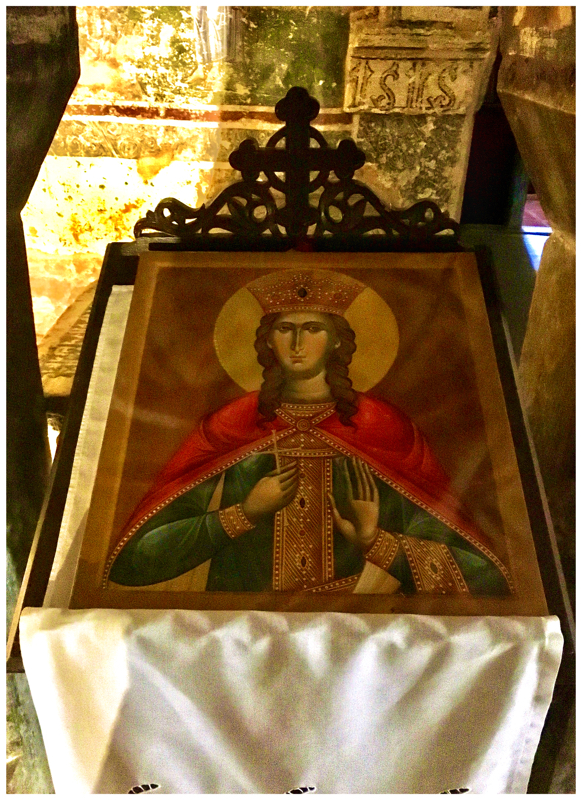
St. Barbara Icon seen above, in Hosios Loukas Monastery Church, Distomo, Greece – 2004. Reflections of the church’s ceiling arches above, are visible on the icon.

11th Century St. Barbara’s Church, Carved in Rock – Cappadocia, 2004

Great-Martyr Barbara and St. Juliana on Wall Fresco, Interior of 11th Century Church, Cappadocia – 2004

Interior of 11th Century St. Barbara’s Church, Cappadocia – 2004

Great-Martyr Barbara Troparion, Tone 8

Let us honour the holy Barbara; for the most honoured one broke the snares of the enemy// and was delivered from them like a bird, with the help and aid of the Cross.

St. Barbara is called upon for protection against sudden death, lightening, fire, and to aid soldiers, and firefighters.

St. Barbara was born in the Greek city of Heliopolis in Syria, now called Baalbek, in eastern Lebanon. St. Barbara’s feast day is known as Eid il-Burbara to Christians in Jordan, Syria and Lebanon, and there is a special St. Barbara’s Day dessert made to celebrate. Although the dish is traditionally prepared from boiled wheat hulls, rose water, cinnamon, anise and nuts, I like to use Cream of Wheat. This aromatic sweet recalls the tradition that freshly planted wheat fields miraculously sprung up behind St. Barbara covering her initial escape path to the mountains.

Here is my own festal and vegan (fasting-friendly) recipe for St. Barbara’s Day Dessert.

Holy Great-Martyr Barbara and St. Juliana, pray to God for us!

Pearls of Compunction

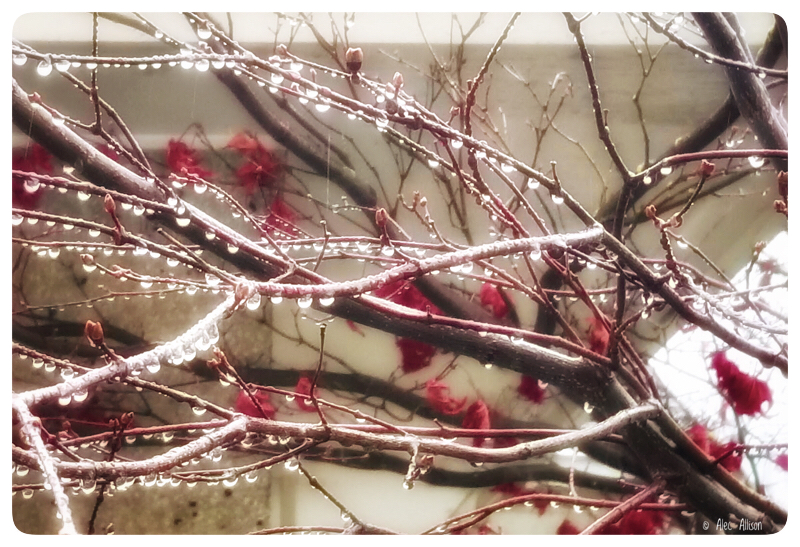
Photo Shared by Alec

Let each one of us keep in mind the benefit of fasting… For this healer of our souls is effective, in the case of one to quieten the fevers and impulses of the flesh, in another to assuage bad temper, in yet another to drive away sleep, in another to stir up zeal, and in yet another to restore purity of mind and to set him free from evil thoughts. In one it will control his unbridled tongue and, as it were by a bit, restrain it by the fear of God and prevent it from uttering idle and corrupt words. In another it will invisibly guard his eyes and fix them on high instead of allowing them to roam hither and thither, and thus cause him to look on himself and teach him to be mindful of his own faults and shortcomings. Fasting gradually disperses and drives away spiritual darkness and the veil of sin that lies on the soul, just as the sun dispels the mist. Fasting enables us spiritually to see that spiritual air in which Christ, the Sun who knows no setting, does not rise, but shines without ceasing. Fasting, aided by vigil, penetrates and softens hardness of heart… it causes fountains of compunction to spring forth… it is not possible for these things to come about in one day or one week! They will take much time, labour, and pain, in accordance with each man’s attitude and willingness, according to the measure of faith and one’s contempt for the objects of sight and thought. In addition, it is also in accordance with the fervour of his ceaseless penitence and its constant working in the secret chamber of his heart that this is accomplished more quickly or more slowly by the gift and grace of God. But without fasting no one was ever able to achieve any of these virtues or any others, for fasting is the beginning and foundation of every spiritual activity. ~ St. Symeon the New Theologian

Lampstand of the Light

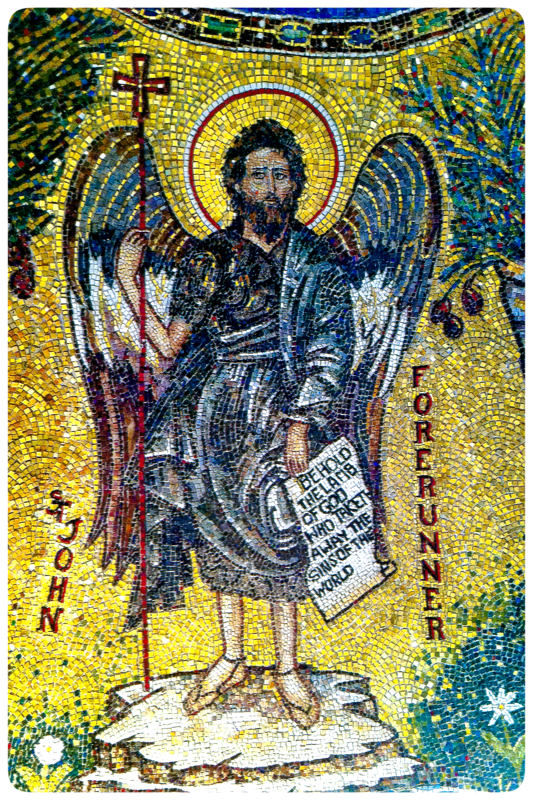
Dome Mosaic of St. John the Baptist – St. Sophia Orthodox Church, Canada

St. John the Baptist is called the voice of the Word, the Lampstand of the Light, the morning star and Forerunner of the Sun of Righteousness.

He is named Forerunner, as he preceded Christ… being sent as a Messenger to prepare the people for Christ’s ministry. Angel in Greek means messenger, and some icons of St. John the Baptist depict him with angelic wings, on account of Malachi’s prophecy from the Old Testament.

Several dates during the Liturgical year specifically celebrate the birth, life and death of St. John the Forerunner and Baptist of Christ.

On September 11 (August 29, Julian calendar) we remember St. John the Baptist’s heavenly birthday and martyrdom. In honour of the greatest of all prophets who have ever lived, and since ancient times, the Church has celebrated this leading luminary by establishing this day as a fast.

St. John the Baptist is the personification of faithfulness to God, righteousness, and asceticism. He is so revered, that each Tuesday, every week of the year is also dedicated to him.

There was a man sent from God, whose name was John. The same came for a witness, to bear witness of the Light, that all men through him might believe. He was not that Light, but was sent to bear witness of that Light. That was the true Light, which lighteth every man that cometh into the world. ~ St. John 1:6-9

This image has an empty alt attribute; its file name is stjohnbaptisticonstsophia.jpeg
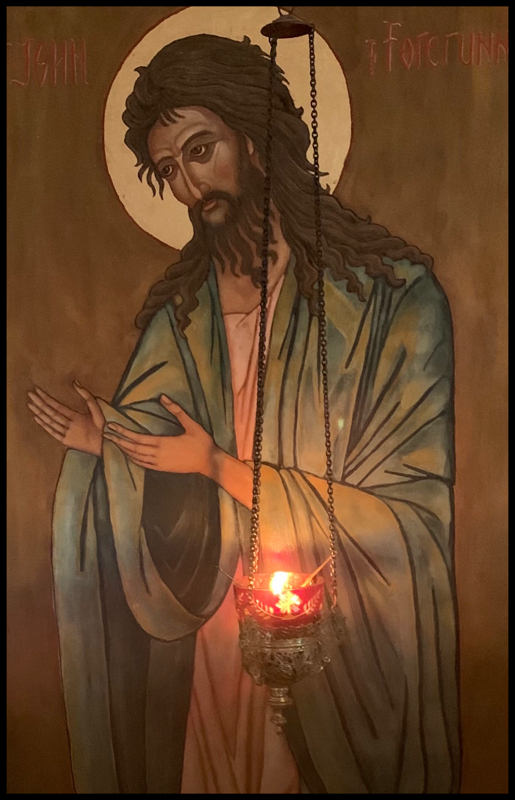
St. John the Baptist – St. Sophia Orthodox Church, Canada

St. John the Baptist Resource Page

700 years before the birth of Christ, the Prophet Isaiah foretold the preaching of John the Baptist. Isaiah called St. John  “the voice of him that crieth in the wilderness”  (Isaiah 40:3); who was to “prepare  the way of the Lord, make straight in the desert a highway for our God.” 

Malachi, the last of the Old Testament prophets, who lived more than 400 years before the birth of Christ foretold the coming of St. John the Baptist, and refers to him as an angel. Behold I will send My Angel, and he shall prepare the way before Me; and the Lord, whom ye seek, shall suddenly come to His temple, even the Angel of the covenant, whom ye delight in: behold, He shall come, saith the Lord of hosts. ~ Malachi 3:1-2

St. Luke 1:5-80

There was a man sent from God, whose name was John. The same came for a witness, to bear witness of the Light, that all men through him might believe. He was not that Light, but was sent to bear witness of that Light. That was the true Light, which lighteth every man that cometh into the world. ~ St. John 1:6-9

St. Matthew 3:1-12

St. Matthew 3:13-17

St. Mark 6:17-29

Christ Himself said: Verily I say unto you, Among them that are born of women there hath not risen a greater than John the Baptist: notwithstanding he that is least in the kingdom of heaven is greater than he. ~ St. Matthew 11:11

Through the holy prayers of St. John the Forerunner and Baptist of Christ, our Leading Luminary, may we, too, stand as steadfast shining candles before the Lord; radiating His Effulgent and Gladsome Light!

Angelic Banquet

The upcoming two week Dormition Fast which (on the civil calendar) begins August 14th, helps us prepare for the Feast Day on August 28th, of the Dormition – which means falling asleep, the repose of our most holy Lady Theotokos and Ever-Virgin Mary!

Fasting possesses great power. To fast is to banquet with angels. ~ St. Athanasius the Great

And indeed that which I am about to say is wonderful, yea it is of those things which are very miraculous; yet not far from the truth, as you may be able to learn from the sacred writings. That great man Moses, when fasting, conversed with God, and received the law. The great and holy Elijah, when fasting, was thought worthy of divine visions, and at last was taken up like Him who ascended into heaven. And Daniel, when fasting, although a very young man, was entrusted with the mystery, and he alone understood the secret things of the king, and was thought worthy of divine visions. But because the length of the fast of these men was wonderful, and the days prolonged, let no man lightly fall into unbelief; but rather let him believe and know, that the contemplation of God, and the word which is from Him, suffice to nourish those who hear, and stand to them in place of all food. For the angels are no otherwise sustained than by beholding at all times the face of the Father, and of the Saviour who is in heaven. And thus Moses, as long as he talked with God, fasted indeed bodily, but was nourished by divine words. When he descended among men, and God had gone up from him, he suffered hunger like other men. For it is not said that he fasted longer than forty days – those in which he was conversing with God. And, generally, each one of the saints has been thought worthy of similar transcendent nourishment. ~ St. Athanasius the Great

May your Dormition Fast be peaceful and fruitful.

error: Content is protected !!