Wake the Day With Gladness

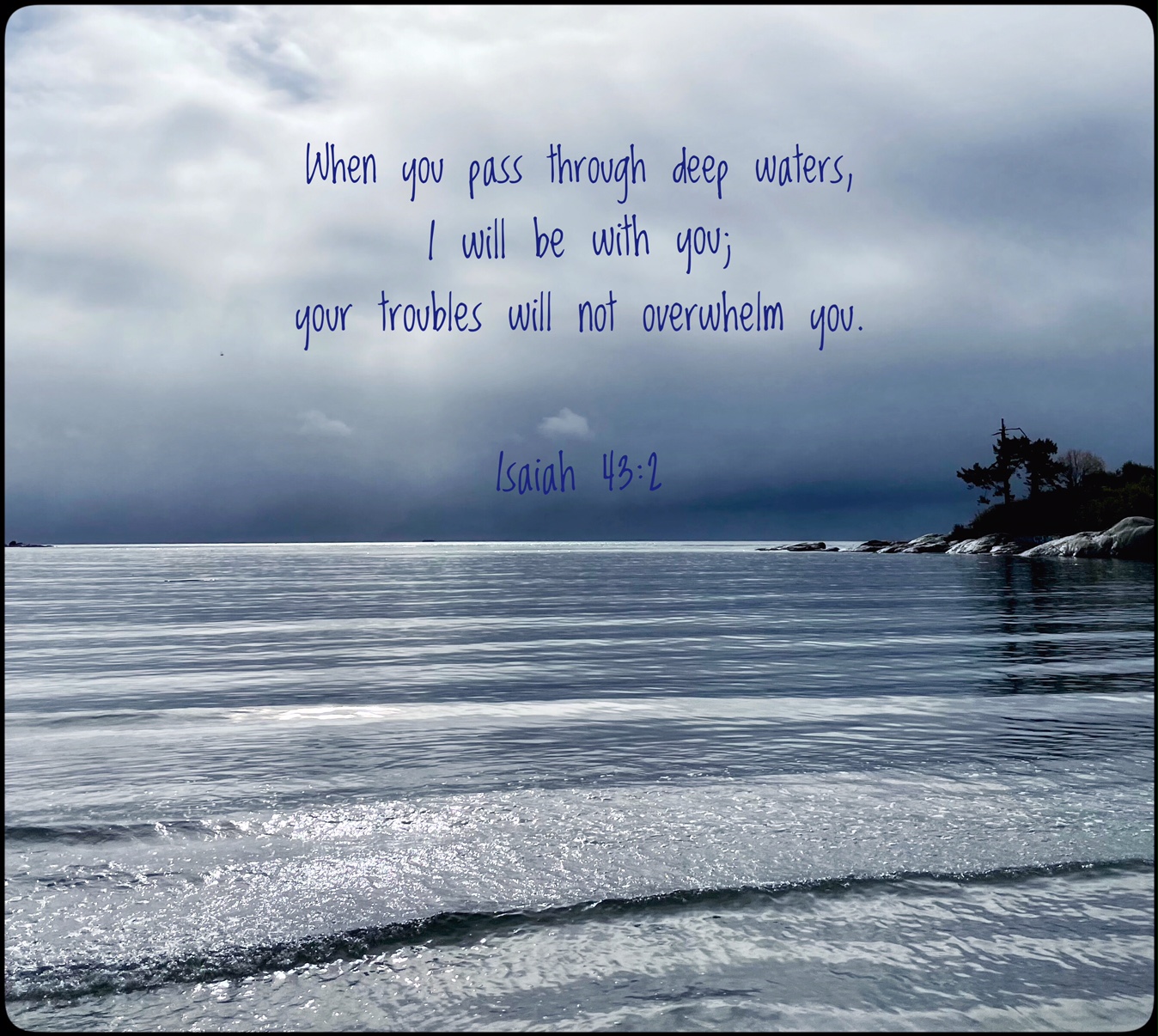
This Morning’s Sonshine Broke Through Storm Clouds

Today we commemorate the heavenly birthday of sainted Good King Wenceslas! Many westerners have been introduced to him through an ancient Christmas Carol, retelling one of his miracles.

In this carol, St. Wenceslas helps distribute alms to the needy on the Eve of the Feast of St. Stephen the Apostle, Deacon, and Protomartyr (celebrated on the third day of Christmas); when the churches were opened and yearly collections from the Poor Alms Boxes were dispersed among the needy of the community. This was the original purpose and meaning of Boxing Day!

St. Wenceslas was martyred on today’s date (September 28/October 11) in the year 935. He is buried in Prague. 

A beautiful hymn was penned in the 9th century by St. Joseph the Hymnographer – a Greek monk, and one of the many liturgical poets and hymnographers of the Orthodox Church. The hymn was later translated into English, and woven into the ancient 13th century carol melody used for Good King Wenceslas.

This ancient hymn was also later sung on St. Stephen’s feast day and many other special days of the martyrs. Some churches add on St. Joseph the Hymnographer’s hymn to carol of Good King Wenceslas, as an extra and final verse:

Christian friends, your voices raise.
Wake the day with gladness.
God Himself to joy and praise 
turns our human sadness: 
Joy that martyrs won their crown, 
opened heav’ns bright portal, 
when they laid the mortal down 
for the life immortal.

Whatever we do, let us always try to do our very best to please God our Creator… that we may wake each day with gladness, and rejoice to see heaven’s bright portal break through the clouds… to illumine the way ahead!

Whatsoever thy hand findeth to do, do it with thy might

St. Caedmon’s Day Greetings

Thank you Fr. Serafim Mull Monastery for kind permission to use St. Caedmon’s Icon.

O sing unto the Lord a new song: sing unto the Lord, all the earth. ~ Psalm 96:1

Speaking to yourselves in psalms and hymns and spiritual songs, singing and making melody in your heart to the Lord; ~ Ephesians 5:19

…a psalm is the work of angels, a heavenly institution, the spiritual incense. ~ St. Basil the Great

Today is St. Caedmon’s Day! This 7th British Saint heard angels sing and wrote the earliest English poem in existence.

It’s heart-piercingly beautiful, and after wading through these Latin, Northumbrian, West Saxon translations and sources of his work… I knew this poem was just aching to be adapted into a simpler, modern English read.

Sadly, no original music remains of St. Caedmon’s hymn, and alas and alack, I never found any olden West Saxon melodies to work with… They’re scarcer than hen’s teeth!

You can imagine how thrilling it was to encounter the ancient 13th century Byzantine Greek Chant, Defte Lai and know how the majestic melody would also suit the adaptation of St. Caedmon’s poem. It’s pure joy to reclaim Defte Lai’s ageless air for another venerable Orthodox Hymn.

One of St. Caedmon’s contemporaries was the Greek monastic – St. Theodore of Tarsus, who became the 8th Archbishop of Canterbury England, so my Byzantine nod isn’t too far removed.

Here’s the pdf sheet music for my 2022 adaptation and recording below of St. Caedmon’s Hymn.

3 chords used in this recording – while strumming on my ukulele crutch are: Fm; Cm; and B♭m

St. Caedmon’s Creation Hymn:

Come magnify Him,
Creator of the firmament,
Author of each and all,
And glorify His purpose;
Love, Invincible.

Come and honour Him,
Protector of Fair Paradise,
Holy, Mighty, Immortal,
Architect, Omnipotent;
Father of Glory.
Blessed, Timeless, Lord,
Thou hast established Thy wonders,
Before middle earth* was formed,
Or adorned with Thought of Mind;
Lord, God Almighty!

For the sons of men;
Thou formed the Roof of Heaven!

* Middle earth (not just a Tolkien invention)- it means the world, the middle enclosure – which exists between heaven and hell. From Middle English middel-erde, and Old English middangeard.

Through the Holy Prayers of St. Caedmon, may we – through the Wonderful Mystery of Creation, magnify our Blessed and Timeless Lord!

What Are We Looking For?

Image by Παναγιώτης from Pixabay

When we are coming to church what are we looking for? Fish in the desert? No, we are looking for that hidden “inward meditation” of the heart which unites us to Christ… The same thing happens in the church where you are mystically and sacramentally united with Christ. In and through your inner meditation on these things they will become a reality… In order to find Him strive to enter into that hidden, inner meditation and you’ll see that He’ll come of His own accord. You’ll see the heavy stone roll away from your heart and He Himself will rise! ~ Elder Aimilianos (The Way of the Spirit)

Eleos

Image by congerdesign Pixabay

Greetings on Clean Friday!

The word alms in Old English was aelmysse. In Latin – eleemosyna.

Alms in Greek is eleemosune – meaning compassion; while eleemon and eleos, also used for alms – imply mercy.

Blessed are the merciful, for they shall obtain mercy. ~ Matthew 5:7

A poor man when he reaches out to you does not beg, but offers you the Kingdom of God. ~ St. Arsenie Papacioc

He who gives alms in imitation of God does not discriminate between the wicked and the virtuous, the just and the unjust, when providing for men’s bodily needs. ~ St. Maximos the Confessor

Sins are purged by alms and acts of faith. ~ St. Clement of Alexandria

May your Lenten Journey be peaceful and fruitful.

Lampstand of the Light

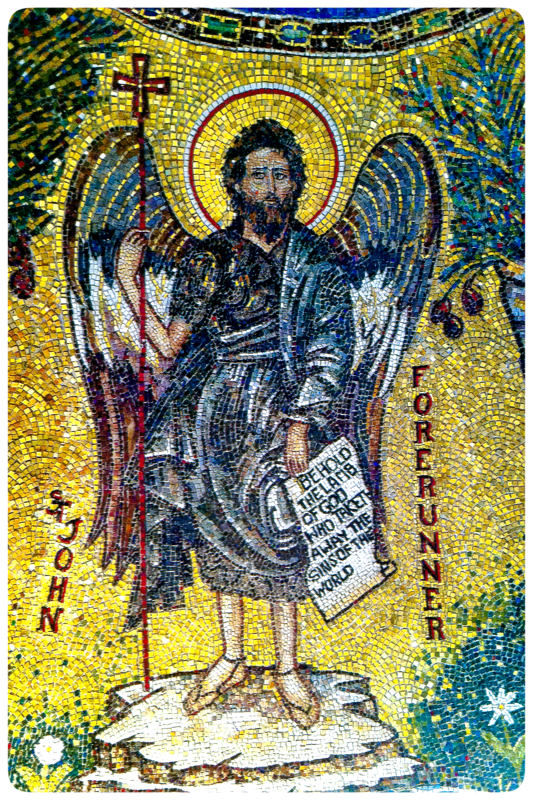
Dome Mosaic of St. John the Baptist – St. Sophia Orthodox Church, Canada

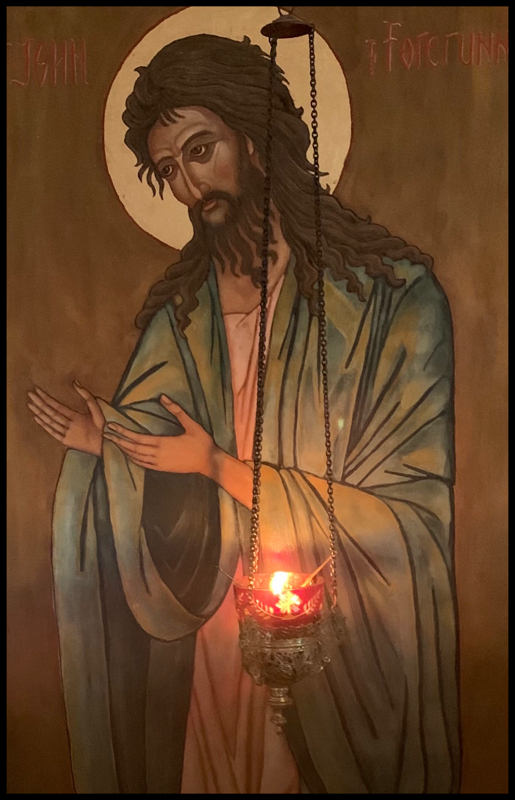
St. John the Baptist is called the voice of the Word, the Lampstand of the Light, the morning star and Forerunner of the Sun of Righteousness.

He is named Forerunner, as he preceded Christ… being sent as a Messenger to prepare the people for Christ’s ministry. Angel in Greek means messenger, and some icons of St. John the Baptist depict him with angelic wings, on account of Malachi’s prophecy from the Old Testament.

Several dates during the Liturgical year specifically celebrate the birth, life and death of St. John the Forerunner and Baptist of Christ.

On September 11 (August 29, Julian calendar) we remember St. John the Baptist’s heavenly birthday and martyrdom. In honour of the greatest of all prophets who have ever lived, and since ancient times, the Church has celebrated this leading luminary by establishing this day as a fast.

St. John the Baptist is the personification of faithfulness to God, righteousness, and asceticism. He is so revered, that each Tuesday, every week of the year is also dedicated to him.

There was a man sent from God, whose name was John. The same came for a witness, to bear witness of the Light, that all men through him might believe. He was not that Light, but was sent to bear witness of that Light. That was the true Light, which lighteth every man that cometh into the world. ~ St. John 1:6-9

This image has an empty alt attribute; its file name is stjohnbaptisticonstsophia.jpeg
St. John the Baptist – St. Sophia Orthodox Church, Canada

St. John the Baptist Resource Page

700 years before the birth of Christ, the Prophet Isaiah foretold the preaching of John the Baptist. Isaiah called St. John  “the voice of him that crieth in the wilderness”  (Isaiah 40:3); who was to “prepare  the way of the Lord, make straight in the desert a highway for our God.” 

Malachi, the last of the Old Testament prophets, who lived more than 400 years before the birth of Christ foretold the coming of St. John the Baptist, and refers to him as an angel. Behold I will send My Angel, and he shall prepare the way before Me; and the Lord, whom ye seek, shall suddenly come to His temple, even the Angel of the covenant, whom ye delight in: behold, He shall come, saith the Lord of hosts. ~ Malachi 3:1-2

St. Luke 1:5-80

There was a man sent from God, whose name was John. The same came for a witness, to bear witness of the Light, that all men through him might believe. He was not that Light, but was sent to bear witness of that Light. That was the true Light, which lighteth every man that cometh into the world. ~ St. John 1:6-9

St. Matthew 3:1-12

St. Matthew 3:13-17

St. Mark 6:17-29

Christ Himself said: Verily I say unto you, Among them that are born of women there hath not risen a greater than John the Baptist: notwithstanding he that is least in the kingdom of heaven is greater than he. ~ St. Matthew 11:11

Through the holy prayers of St. John the Forerunner and Baptist of Christ, our Leading Luminary, may we, too, stand as steadfast shining candles before the Lord; radiating His Effulgent and Gladsome Light!

Holy Mandylion

Outdoor Mosaic of Christ the Holy Wisdom and Power of GodFestal Icon and Feast Day of St. Sophia Orthodox Church, Canada.

Greetings on today’s wonderful Feast! (Sometimes this Feast Day is transferred to the nearest Sunday after the Feast of the Dormition)

On this day (August 29/16) we celebrate the first century Icon of our Lord Jesus Christ Not-Made-by-Hands’ later transference from the city of Edessa to Constantinople, in the year 944.

And there are also many other things which Jesus did, the which, if they should be written every one, I suppose that even the world itself could not contain the books that should be written. Amen. ~ St. John 21:25

Mandylion is the Byzantine Greek word for small towel or cloth (pronounced man-dee-lee-o).

The Holy Mandylion is the miraculous Image known as the first icon, which our Lord Himself, produced .

In the mystical theology of the Orthodox Church, Wisdom is understood as the Divine Logos (God the Word), Who became Incarnate as Jesus Christ. The name St. Sophia comes from the Greek Ἁγία Σοφία (Hagia Sophia) and signifies “Holy Wisdom” meaning “Jesus Christ”The Wisdom and Power of God. (1 Corinthians 1: 24,30; 1 Corinthians 2:7)

In the beginning was the Word, and the Word was with God, and the Word was God. The same was in the beginning with God. All things were made by Him, and without Him was not anything made that was made…And the Word was made flesh, and dwelt amongst us; and we beheld His glory, the glory as of the only Begotten of the Father, full of grace and truth…No man hath seen God at any time; the only begotten Son, who is in the bosom of the Father, He hath declared Him. ~ First chapter of 1 John

Troparion Tone 2 Melody, of Today’s Feast

(A troparion and kontakion are short sung hymns sung in a certain melody which teach about a special saint, prophet or Feast Day)

We bow down, before Thine all pure Image O Good One, Asking forgiveness of our transgressions, O Christ God; for Thou wast well pleased to ascend the Cross in the flesh of Thine own will, that Thou mightest save what Thou hadst created from slavery to the enemy. Wherefore, we cry out to Thee in thanksgiving: Thou hast filled all things with joy, O our Saviour, Who hast come to save the world.

Kontakion in Tone 2 Melody, of Today’s Feast

O Uncircumscribable Word of the Father, knowing the victorious image, uninscribed and divinely wrought, of Thine ineffable and divine dispensation towards man, of Thy true Incarnation, we honour it with veneration.

Elaia

Ancient Olive Tree. Image by Valter Cirillo from Pixabay. 

But I am like a green olive tree in the house of God: I trust in the mercy of God for ever and ever. ~ Psalm 52:8

Elaia in Greek means Olive.

The Greek word mercy is éleos and is derived from oil as from the olive branch… a symbol for peace, harmony, soothing and healing.

The Hebrew word for mercy comes from hesed, which means steadfast love. When we say “Lord have mercy”, we are literally saying over and over: Lord… soothe me… and show me your healing, steadfast love!

Kyrie Eleison (in Greek), means Lord Have Mercy… a Biblical phrase and prayer to God, which briefly, yet completely, encompasses everything we ever need.

Bee Ye Kinde

And bee ye kinde one to another, tender hearted, forgiuing one another, euen as God for Christs sake hath forgiuen you. ~ Ephesians 4:32; from the 1611 Original King James Version with archaic English spelling.

And be ye kind one to another, tenderhearted, forgiving one another, even as God for Christ’s sake hath forgiven you. ~ Ephesians 4:32; the Authorized King James Version, the Cambridge edition with updated English Spelling from 1769.

It is beautiful.

The most accurate translations available [of the Bible] in English are the King James (or Authorized) Version (KJV or AV), the New King James Version (NKJV), and The English Standard Version (ESV)… The King James is in fact generally so accurate that one could reconstruct the original text with a high degree of accuracy by translating the text back into Hebrew and Greek, though unlike many [other] translations that are so woodenly literal they actually distort the meaning of the text… ~ Fr. John Whiteford

Thrice Holy

Entrance with Trisagion Prayer in Ancient Greek

Trisagion from Greek, means thrice [tris] and holy [agios]. This Thrice Holy Prayer to the Holy Trinity is used during private prayer, and throughout the Church’s daily worship cycle.

Trisagion in English: Holy God, Holy Mighty, Holy Immortal, have mercy on us.

Trisagion in Greek Pronounced: Agios O Theos, Agios Eeskhiros, Agios Athanatos, eleison imas)

History and Miracle of the Trisagion Hymn

Above, the hosts of angels sing praise; below, men form choirs in the churches and imitate them by singing the same doxology. Above the Seraphim cry out the Trisagion Hymn; below, the human throng sends up the same cry. The inhabitants of heaven and earth are brought together in a common assembly; there is one thanksgiving, one shout of delight, one joyful chorus. ~ St. John Chrysostom

The unceasing and sanctifying doxology by the holy angels in the Trisagion signifies, in general, the equality in the way of life and conduct and the harmony in the divine praising which will take place in the age to come by both heavenly and earthly powers, when the human body now rendered immortal by the resurrection will no longer weigh down the soul by corruption and will not itself be weighed down but will take on, by the change into incorruption, potency and aptitude to receive God’s coming. In particular it signifies, for the faithful, the theological rivalry with the angels in faith; for the active ones, it symbolizes the splendor of life equal to the angels, so far as this is possible for men, and the persistence in the theological hymnology; for those who have knowledge, endless thoughts, hymns, and movements concerning the Godhead which are equal to the angels, so far as humanly possible. ~ St. Maximus the Confessor

error: Content is protected !!