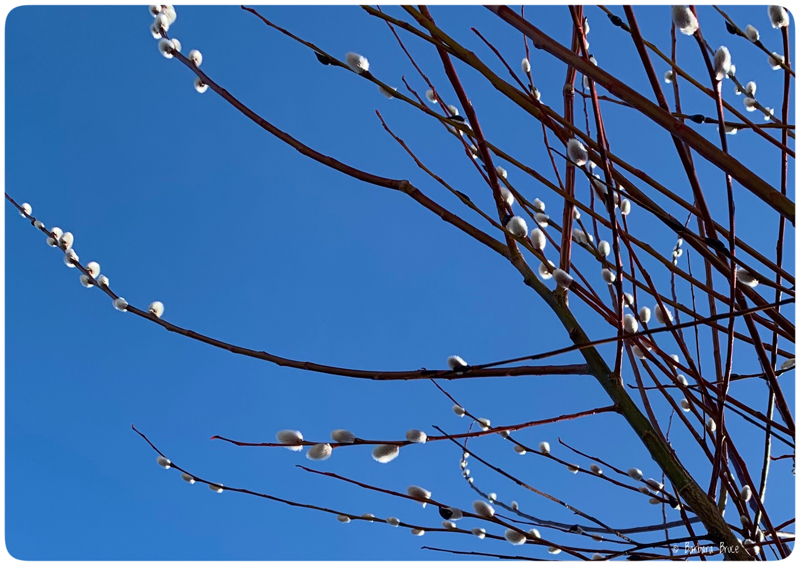
Now we worry about a piece of bread, about a roof over our heads, about our social conditions. And it seems to us that the meaning of life consists of this. But the Church says, Look at the pussy willows: leaves will sprout and later flowers and fruit. So it is even in a Christian soul. ~ Archbishop Andrei Rymarenko (1893- 1978)
When Jesus was forty days old, the Virgin Mary and St. Joseph the Betrothed brought Christ to the templein order to fulfill the law and dedicate Him to God.
The celebration of the Meeting of the Lord in the church is not merely a historical commemoration. Inspired by the same Holy Spirit as Simeon, and led by the same Spirit into the Church of the Messiah, the members of the Church also can claim their own “meeting” with the Lord, and so also can witness that they too can “depart in peace” since their eyes have seen the salvation of God in the person of his Christ. ~ www.oca.org
On today’s Feast of the Meeting of the Lord, when the heavens meet the earth, God meets man, history meets eternity, when – as our people beautifully say – spring and winter meet, may we also open our hearts for an encounter with the Lord… Open your hearts, listen to the depths of your thoughts, desires, feelings, anticipations, nostalgias, yearnings, the pursuits of your hearts. For our hearts are created in the image of God and they yearn for God; the truth is often buried in passions, desires, appetites, ambitions, prejudices. Let us free ourselves of them and meet the Lord, for He always comes to meet us. He is the One who came, who is with us, Who always comes to be with us. ~ Bishop Atanasije (Homily on the Meeting of our Lord, Orthodox Christianity website)
Let us not only dedicate our little children in imitation of Christ’s dedication, but let us dedicate ourselves – perhaps again, perhaps for the first time – so that we may also be found held in the arms of the righteous Simeon, so that we also may see the salvation that he saw and know the mercy and peace and beauty of the Lord that will last not only into our departure from this life as it did with him, but also through all eternity. ~ Father Andrew Stephen Damick
The important thing is for us to enter into the Church (temple) – to unite ourselves with our fellow men, with the joys and sorrows of each and everyone, to feel that they are our own, to pray for everyone, to have care for their salvation, to forget about ourselves, to do everything for them just as Christ did for us. In the Church we become one with each unfortunate, suffering and sinful soul. ~ Elder Porphyrios (Wounded by Love)
I remember my young Baptist mind being astounded there were actually two Saints from “forever ago” with real names! But why only two (St. Valentine and St. Patrick) I wondered, when we are surrounded by so great a cloud of witnesses!?
In secular society, “Valentine’s Day” is given the nod – but mostly to a cupid logo substitution, removal of the saint title, and the “V” changed to small case. Peddling Festivitiesis not a new thing either. Sales and Marketing in the Retail World quietly sweep holy days under a generic blanket of holiday commercialism.
For Orthodox Christians, St. Valentine’s Day and all the saints’ days every day of the year, are glorious opportunities to learn more of our heavenly friends. By celebrating their summits of virtue, their struggles, courage, and pure love of God… we too, learn how to emulatethem.
Children are instinctively drawn to the sweet essence of kindness and love remembering St. Valentine. Like St. Patrick’s Day, St. Valentine’s Day can open a wonderful lead into sharing the lives of other daily saints. God’s Loveis true Love. His Perfect Lovestrengthens and blesses the bonds of spouses, families, friends, and neighbours.
The Saviour knocks on the Door of our Heart. He waits patiently for us to hear Him, to open the door, and to let Him in.
When we give our whole heart to Christ, He in turn refills it with so much Love, that it overflows with Joy!
For where your treasure is, there your heart will be also. ~ Matthew 6:21
And now these three remain: faith, hope and love. But the greatest of these is love. ~ 1 Corinthians 13:13
The YouTube video below is a Gaelic Folk Song about St. Brigid, with an English Translation in the description section. The lineage of Gabhaim Molta Bríghde’s ancient, traditional melody and lyrics are from “unknown sources” however this arrangement of Sheet Music is sometimes attributed to Tomás Ó Flannghaile (Thomas Flannery), 1846-1916.
On St. Brigid’s day, we celebrate Christ, the Light unto all Nations – the Eternal Spring Who draws nigh to all.
Troparion of Venerable Mother Brigid, Enlightener of Ireland (Tone 4): Instructed by the discourses of the holy Patrick, thou didst arrive at the utmost west, heralding the Orient which hath visited us from on high. Wherefore, we bless thee, O venerable mother Brigid, and cry out to thee: Pray thou in behalf of souls.
Kontakion of Venerable Mother Brigid, Enlightener of Ireland (Tone 6): Rejecting thy noble rank, and loving the godly monastic life, from the wood of the oak didst thou raise up a convent, the first in thy land; and having there united a multitude of nuns to God, thou didst teach the surrounding lands to cry to the Lord: Have mercy on us!
St. Brigid continues to bestow blessings upon those who come to her with faith, interceding with Christ our God, that He may have mercy on our souls.
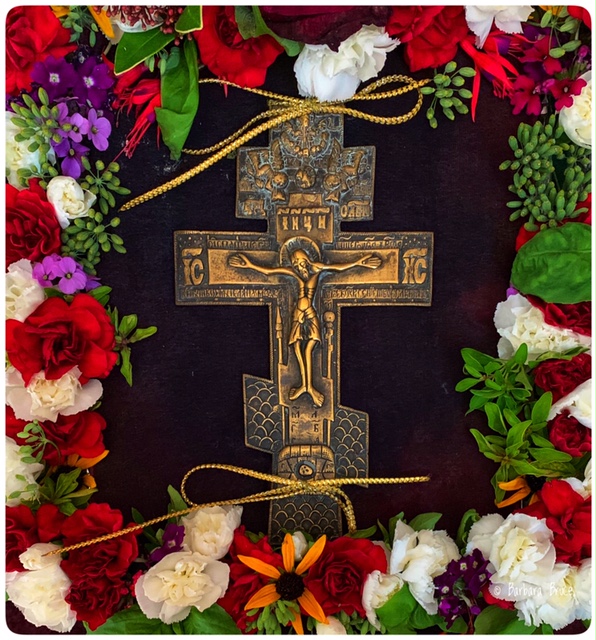
The Cross, is wood which lifts us up and makes us great… The Cross uprooted us from the depths of evil and elevated us to the summit of virtue. ~ St. John Chrysostom
For the Christian, the cross gradually becomes lighter and more joyful, while for the nonbeliever it becomes heavier and more burdensome. Why is this so? Because where one carries their cross with faith and devotion to God, the other carries it with grumbling and anger. ~ St. Innocent of Alaska (The Way Into the Kingdom of Heaven)
When you pass beside a hospital make the sign of the cross three times: Once for the patients; once for their relatives; and once for yourself, because you aren’t there. ~ St. Paisios the New of Mt. Athos
Patience adorns the soul with diamonds which are not of the earth, but belong to the Jerusalem that is above. Patience is a sweet word. Patience is a sweet breath. Patience is an invincible weapon. Patience is a priceless adornment of man. Patience is a blessing of God. Patience is love and obedience. Patience increases when a person takes God into account. ~ St. Raphael of Lesvos
There is no greater love than that a man lays down his life for his neighbour. When you hear someone complaining and you struggle with yourself and do not answer them back with complaints; when you are hurt and bear it patiently, not looking for revenge; then you are laying down your life for your neighbour. ~ Abba Poemen
May the kindling of Divine Grace blaze brightly in all our hearts!
The grace of the Holy Spirit which is given mystically to every Christian when he is baptised acts and is manifested in proportion to our obedience to the commandments of the Lord. That is, if a Christian obeys the commandments of the Lord more, grace acts with him more, while if he obeys them less, grace acts within him less. Just as a spark, when covered in the ashes of fire becomes increasingly manifest as one removes the ashes, and the more fire wood you put the more the fire burns, so the grace that has been given to every Christian through Holy Baptismis hidden in the heart and covered up by the passions and sins, and the more a man acts in accordance with the commandments of Christ, the more he is cleansed of the passions and the more the fire of Divine grace lights in his heart, illumines and deifies him. ~ St. Nikodemos of the Holy Mountain
Congratulations to my dear goddaughter, Xenia – on your Name’s day. May God grant you many years!
Wondrous is God in His Saints! To this very day, St. Xenia continues to be an intercessor for those needing a home, or employment, or who have a physical or mental illness, or for peoplein search of a spouse. Through God’s mercy, our family can testify to her great support and help!
Here is a beautiful Orthodox folk hymn about the Life of St. Xenia, by Katina.
(Katina’s music can also be heard on Spotify. Although I’ve enjoyed her music over the years, I hadn’t realized she reposed in 2018. Memory Eternal Katina!)
In celebrating St. Xenia’s Day, and remembering certain miracles of her clairvoyance, some like to make blini pancakes.
Blini Crepes can be made for any occasion, and are a time-honoured treat to share. In olden times, this light-fare was served to celebrate a birth or to mark a passing. It’s customary to enjoy Blini Crepes throughout Cheesefare Week (the week before Great Lent begins), up to and including Forgiveness Sunday… the day before Great Lent. This uses up any remaining dairy products, before embarking on the 40 day Vegan Fast of Great Lent.
In closing, I’d like to share what a dear friend recently said…
May St. Xenia help us all remain peaceful, calm, and open to God’s love for mankind.
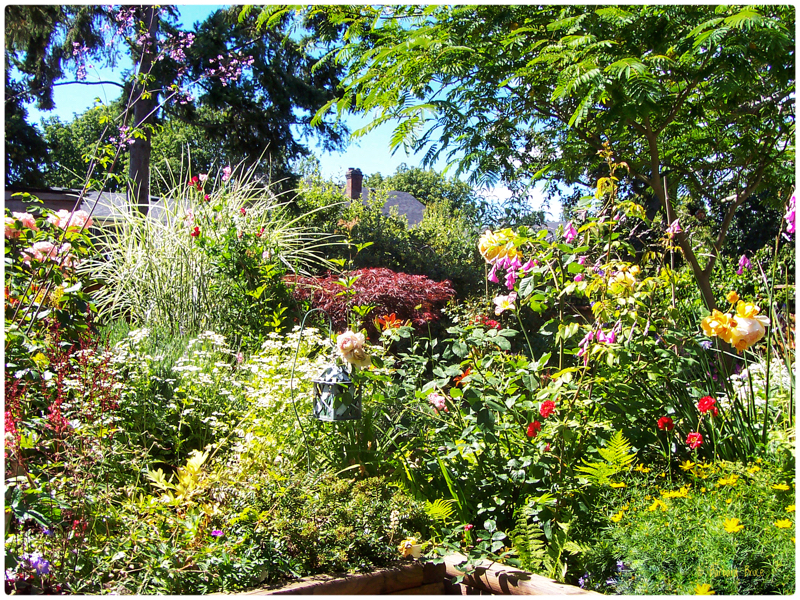
When the garden of your soul is full of thistles (passions), do not try to uproot them, for as long as you concern yourself with them you will always end up being injured and infected by germs. Concentrate all your energy on the flowers of your soul, water them and then the thistles will wither themselves. And the best flower of all is your love for Christ. If you water this and it grows, all the thistles will die off. ~ St. Porphyrios
Just as the blessings of God are unutterably great, so their acquisition requires much hardship and toil undertaken with hope and faith. ~ St. Macarius the Great
If God is slow in answering your request, or if you ask but do not promptly receive anything, do not be upset, for you are not wiser than God. ~ St. Isaac of Syria