A Lenten Prayer

During the weekdays of Great Lent, we say the prayer of St. Ephraim the Syrian (306-373 AD).

O Lord and Master of my life, a spirit of idleness, despondency, ambition and idle talking, give me not. (Prostration)

But, rather, a spirit of chastity, humble-mindedness, patience and love, bestow on me Thy servant. (Prostration)

Yea, O Lord and King, grant me to see my failings and not condemn my brother, for blessed art Thou unto the ages of ages. Amen. (Prostration)

Then the prayer once more in full, with one prostration at the end.

If unable to physically do a prostration, “bend the knees of your heart” instead.

Scripture brought me to the Gate of Paradise, and the mind stood in wonder as it entered. ~ St. Ephraim the Syrian

Let books be your dining table, and you shall be full of delights. Let them be your mattress, and you shall sleep restful nights. ~ St. Ephraim the Syrian
Uncontainable

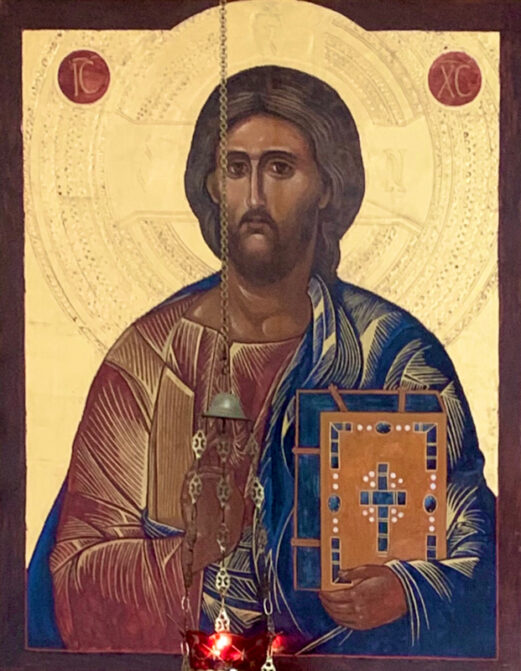
Jesus Christ the Pantocrator

Icon from St. Sophia Orthodox Church, Canada

Pantocrator from the Greek, means Ruler of the Universe. In this icon, Christ’s right Hand is raised in a blessing gesture and His left Hand holds a Gospel.

Gospel came from the Old English word godspel (long “o” sound) literally meaning good news. The first four books of the New Testament are written by the four evangelists (the bearers of good news) Sts. Matthew, Mark, Luke and John. The Gospels narrate our Lord’s teachings, His life, death and Resurrection. They invite us to believe Jesus Christ was born to save the world from sin, and help humanity to truly know God as a Father.

A favourite passage of mine:

And there are also many other things which Jesus did, the which, if they should be written every one, I suppose that even the world itself could not contain the books that should be written. Amen. ~ St. John 21:25

error: Content is protected !!